
March 22 4:00 pm
Part of Bach’s Birthday Bash Weekend
In Music Worcester’s second annual Cantatathon, Worcester Bach Collective ensembles and other regional partners perform a selection of cantatas at Mechanics Hall. This year’s event features the First Baptist Church Choir, Salisbury Singers, the Worcester Children’s Choir, and Voices of Concinnity with Consonare Choral Community.
A cantata is a vocal work for solo/chorus and orchestra, either celebrating sacred or secular traditions. These works are conversations between voice and instrument and are meant to spotlight the technicality of the performer. Over the course of THE COMPLETE BACH’s eleven years, ensembles will present all of Bach’s cantatas. At intermission, join us for cake and champagne in honor of the 341st anniversary of J.S. Bach’s birth.




Christum wir sollen loben schon
BWV 121
Salisbury Singers
Wär Gott nicht mit uns diese Zeit
BWV 14
Voices of Concinnity
Nimm, was dein ist, und gehe hin
BWV 144
Consonare Choral Community
Meinen Jesum laß ich nicht
BWV 124
First Baptist Church
Ach Gott, wie manches Herzeleid
BWV 3
Worcester Children’s Choir
Please note: program, venue, time, and artist are subject to change.
Bach's Birthday Bash Weekend Program
Artists
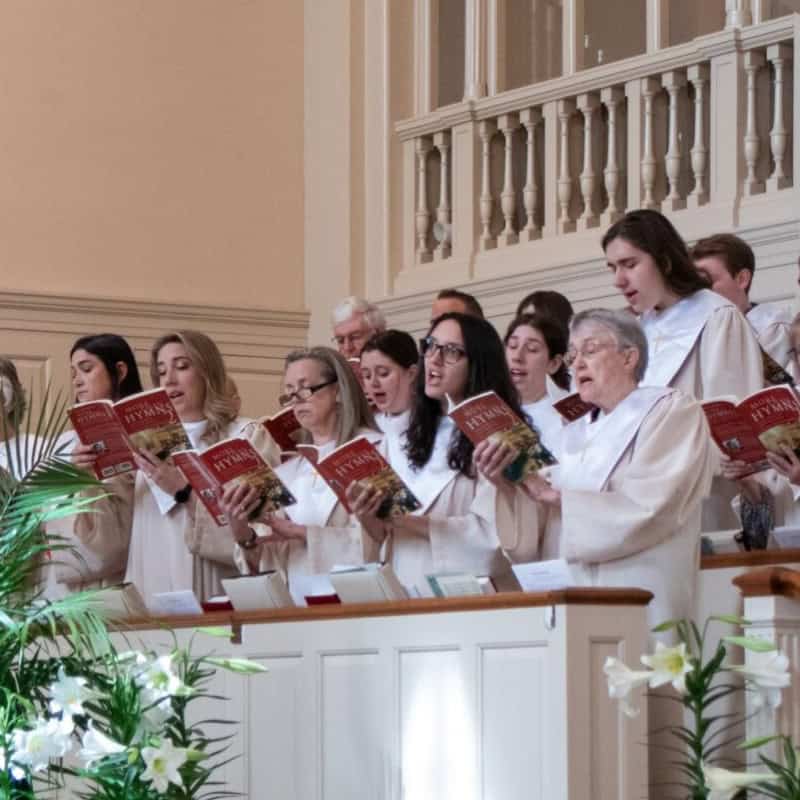
First Baptist Church Choir
dir. Wesley Hall
The First Baptist Chancel Choir is a skilled sacred arts choir consisting of around 30 singers. Comprised of both parishioners and WPI Choral Scholars and organ students, they are Directed by Minister of Music and the Arts, Wesley Hall, and serve as the backbone of musical worship at First Baptist as they have done for many generations under the directorship of T. Charles Lee, Barclay Wood, and William Ness. in addition to their work during Sunday services, the Chancel Choir has participated with numerous other organizations for joint events with the choirs of All Saints and Trinity Lutheran, and for concerts with groups like the Rhode Island Civic Choral and Orchestra, and WPI Festival Chorus. The choir excels at singing a wide range of music required by our liturgical needs, and they are equally at home singing Gospel Music, Bach, Durufle, or new compositions like those of our long-running Choral Anthem Competition. Perhaps most notably, each December the Chancel Choir continues the 80+ year old tradition at First Baptist of presenting the Service of Lessons and Carols, patterned after the famous service at King’s College, Cambridge.
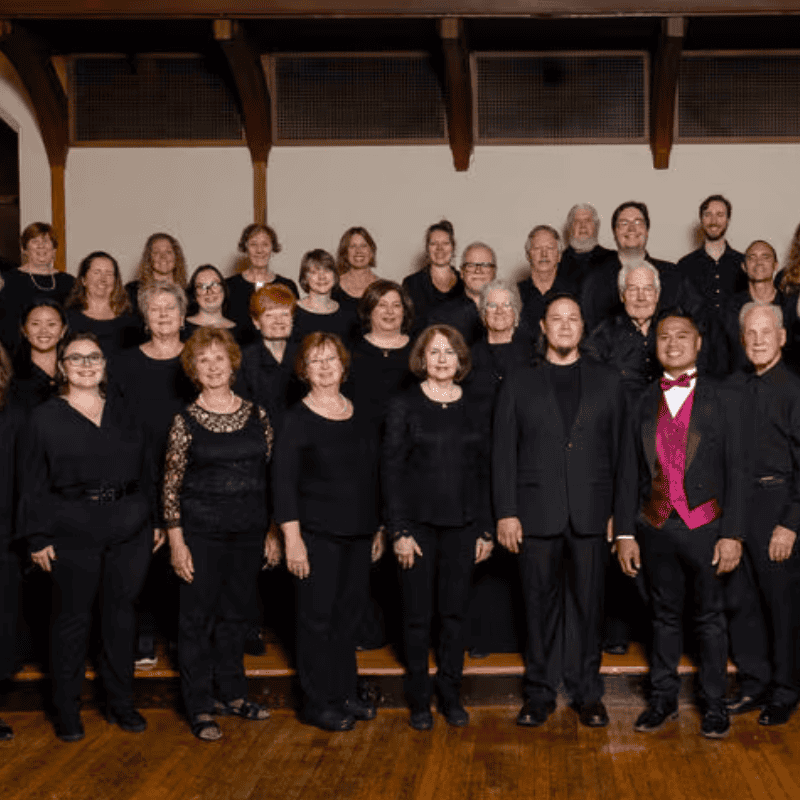
Salisbury Singers
dir. Reagan Paras
Salisbury Singers is a mixed chorus of more than 60 singers under the insightful leadership of Artistic Director Reagan Paras. The chorus is dedicated to the enhancement of cultural life in Worcester and central Massachusetts, as well as the musical growth of its members. Salisbury Singers achieves these objectives through professional quality performances of acapella and accompanied choral repertoire drawn from diverse traditions and styles.
Salisbury Singers, Inc. was founded in 1973 by the late Malama Robbins Collinsworth to foster the highest standards of the musical arts. From 1998-2020, Salisbury Singers was led by Dr. Michelle Graveline to continue this standard of excellence. In 2020, Michelle assumed the role of Artistic Director Emerita. Read more about Michelle here. From 2020-2024, Salisbury Singers was led by Brad Dumont. In 2024, Brad assumed the role of Artistic Director Emeritus.
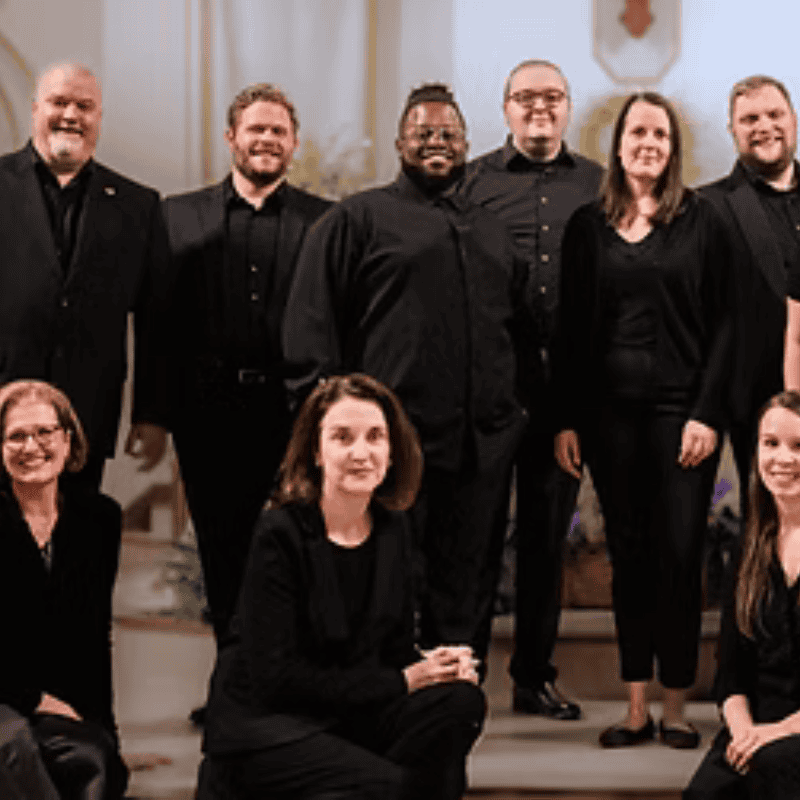
Voices of Concinnity with Consonare Choral Community
dir. Sarah Kaufold
Described by audience members as “silky smooth butter in musical form” and “voices like I imagine angels might sound,” Voices of Concinnity is Connecticut’s versatile professional vocal chamber ensemble illuminating the breadth of choral music through innovative programming and richness of choral sound. Concinnity consists of 12 dedicated, seasoned choral artists from diverse backgrounds with a mission to connect with the community through exquisitely crafted, innovative choral programming that fosters inclusion, promotes collaboration, illuminates variety, and ensures affordable access. A Global Music Award Gold Medal recipient and 2025 American Prize Finalist, Concinnity focuses on individual expression within a cohesive whole, harnessing each singer’s unique vocal qualities into a rich collective sound; thus embracing an honesty that enhances the listening experience and resonates with audiences.
Consonare Community Choir is a mixed voice ensemble open to all singers with no audition that collaborates with an instrumental ensemble to enhance the joy of choral singing through an accessible rehearsal model and connecting through other artistic disciplines.
Both Voices of Concinnity and Consonare Community Choir are sponsored by Consonare Choral Community, an arts nonprofit organization founded in 2018 and based in Mansfield, Connecticut, that works to build community through choral music.
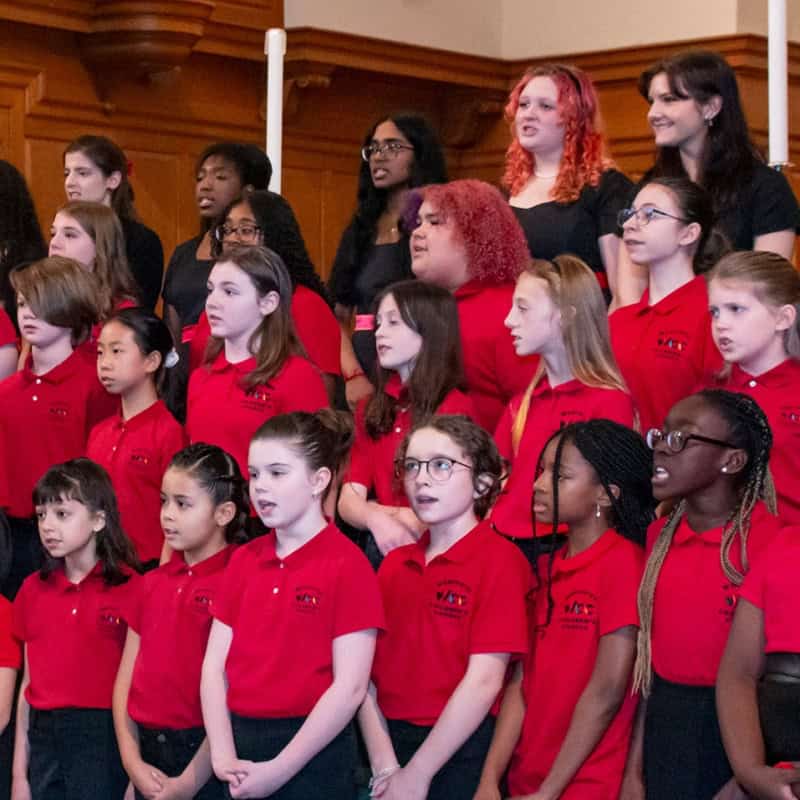
Worcester Children’s Chorus
dir. Pamela Mindell
The Worcester Children’s Chorus (WCC) was founded in 2008 as a program of The Master Singers of Worcester by co-directors Jennifer Kane and Malcolm Halliday. A partnership was also formed at that time between the WCC and Assumption University making WCC a choir “in residence” at the University campus where WCC enjoys rehearsal and performance spaces as well as other resources.
The Worcester Children’s Chorus has performed with many area ensembles, including: The Master Singers of Worcester, The Assabet Valley Mastersingers, The Salisbury Singers, the Thayer Symphony Orchestra, the Worcester Youth Orchestra, and the Worcester Chorus. Members of the chorus have also performed on three occasions at Carnegie Hall in NYC, participated in the International Children’s Chorus Festival at Canterbury Cathedral and London, England, as well as the Crescent City Choral Festival in New Orleans. In 2016, the WCC was featured at Fenway Park, home of the Boston Red Sox, where they performed the Star Spangled Banner before tens of thousands.
Soloists
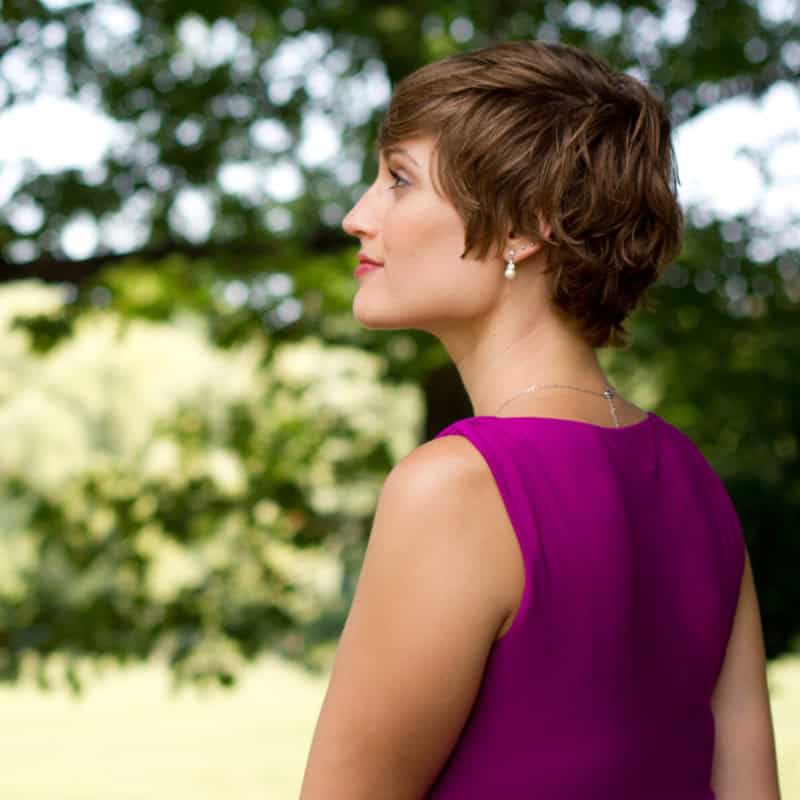
Megan Roth
Mezzo Soprano
Praised for her “versatile voice” and “rich character portrayals,” mezzo-soprano Megan Roth brings vibrant artistry and emotional depth to every performance. She engages audiences across opera, oratorio, art song, and chamber music, with a repertoire spanning early music to contemporary works. Recent operatic highlights include three role debuts with activist opera company White Snake Projects, a dramatic portrayal of La mort de Cléopâtre with the New England Repertory Orchestra, and acclaimed performances as Tisbe in La Cenerentola and Despina in Così fan tutte with Boston Midsummer Opera. Other roles include Rosina (Il barbiere di Siviglia), Meg (Little Women), and Dorabella (Così fan tutte), as well as appearances in Maria Padilla, Béatrice et Bénédict, Trouble in Tahiti, and Giulio Cesare.
On the concert stage, Megan has appeared as soloist in Copland’s In the Beginning, Handel’s Messiah, and Handel’s Dixit Dominus. Her repertoire includes major works by Bach, Mozart, de Falla, and Duruflé. Megan is the founder and artistic director of Calliope’s Call, a New England-based ensemble known for its innovative, culturally resonant art song programming. She also thrives in chamber music settings, performing regularly with top national ensembles including the GRAMMY®- nominated Skylark Vocal Ensemble, Yale Choral Artists, Spire Chamber Artists, Upper Valley Baroque, and True Concord. She was featured as a violin soloist on Skylark’s GRAMMY®- nominated album It’s a Long Way. She holds degrees from Florida State University (M.M., Artist Certificate in Opera) and DePaul University (B.M. in Violin Performance with honor), and has been recognized by The American Prize in multiple categories.
Outside of music, Megan enjoys yoga, contemporary fiction, and kayaking with her husband and their Boston Terriers, Bronx and Brooklyn.

Meghan Ryan
Mezzo Soprano
Meghan graduated from the University of Connecticut studying under Dr. Constance Rock with her Master of Music degree. She received her music education certification from Central Connecticut State University and for several years she taught middle school vocal music in West Hartford, Connecticut. She also received her Bachelor of Music vocal performance degree from Boston University. While at BU she participated in the early music and opera departments, working with voice teacher Frank Kelley. Additionally she attended the Florence Voice Program where she studied with Laura Brooks-Rice.
Meghan has participated with groups including Boston’s Emmanuel Music, Vancouver’s Summer Opera Studio, Opera Theater of Connecticut, Greater Worcester Opera in MA, Pan Opera in MA, and Hartford Opera Theater.
She was a finalist in both the 2013 Connecticut Concert Opera: American Opera Idol Competition and The American Prize in Voice: Friedrich & Virginia Schorr Memorial Awards: Opera, University Division. She was also the mezzo-soprano winner for the 2013 Rhode Island Civic Chorale and Orchestra: Collegiate Vocal Solo Competition and a graduate winner for the University of Connecticut’s 2014 Concerto Competition.
Meghan’s previous roles include Meg March in Little Women with Hartford Opera Theater, Cherubino in Le Nozze di Figaro with the Vancouver Summer Opera Studio, Cherubino in the English translation of Le Nozze di Figaro with Greater Worcester Opera, Nancy in Albert Herring and Rosina in Il Barbiere di Siviglia with University of Connecticut Opera Theater, and Nina in the U.S. premiere of Justin Dello Joio’s Blue Mountain with the University of Connecticut Wind Ensemble.
Meghan was chosen as a mezzo-soprano for a vocal apprenticeship at the 2016 Nahant Music Festival in Nahant, MA. While at this festival she sang the role of Dinah in Bernstein’s Trouble in Tahiti and participated in various other events. Additionally, Meghan was chosen as the mezzo-soprano participant for the 2017 Bach Institute at the Emmanuel Church in Boston where she sang selections from several Bach Cantatas and sung with the Emmanuel Music Choir.
Meghan has sung on three Bach Cantata CD’s with Emmanuel Music musicians including soprano Kendra Colton and oboist Peggy Pearson. She also performs regularly with Boston Baroque and has been on the chorus roster since 2017. She recently sung the role of Second Priestess in the opera Iphigenie en Tauride last spring 2024 with Boston Baroque. Meghan is looking forward to singing as an alto chorus member on Haydn’s Creation, Handel’s Messiah, and the Handel opera Ariodante during the 2024 – 2025 season.
She was thrilled to be chosen as the alto fellow for the Bach Akademie of Charlotte, NC during June 2024. She sung works including Bach Cantata’s BWV 1083 & BWV 37, a Renaissance Motet Concert with selections including Parry, Gombert, Wert, and Monteverdi’s Vespers of 1610.
She has her CT music education teaching certificate from Central CT State University and currently teaches public elementary music in Avon, CT. She recently completed her Suzuki piano Book 1 teacher training and she completed her Suzuki voice Book 1 teacher training this summer 2024. She is looking forward to teaching Suzuki voice at the University of Hartford – Hartt School of Music’s Community Division this coming year.
In her spare time, Meghan enjoys spending time with her family, teaching ZUMBA dance classes, exploring world music, and enjoying being in her garden outside.
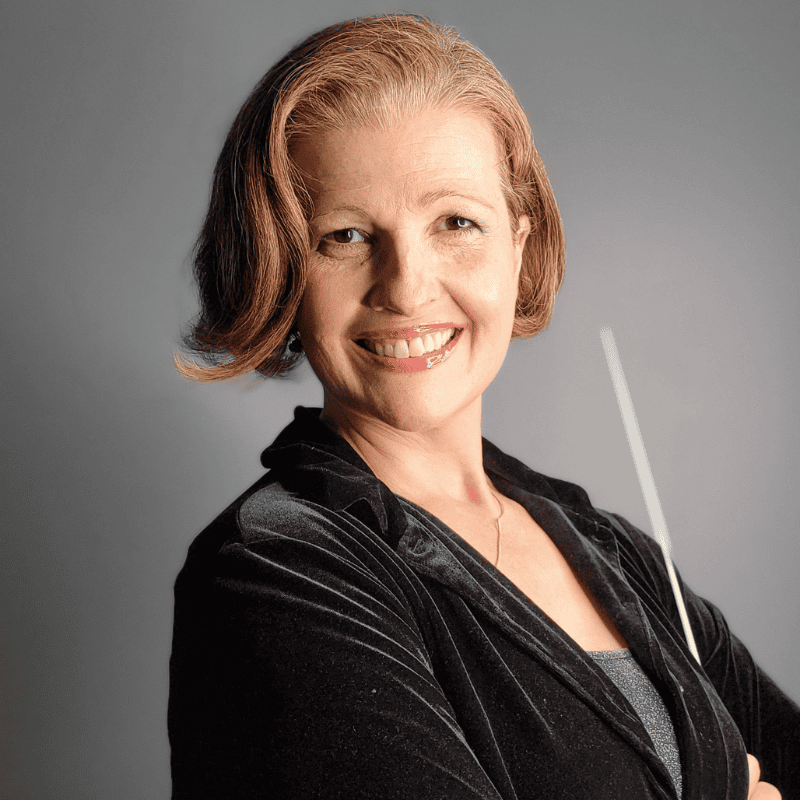
Sarah Kaufold
Soprano
Sarah Kaufold is an experienced conductor, singer, and music educator who advocates for inclusion on the podium, within the choral ensemble, and in the choir folder. While she pursues a doctorate in Choral Conducting as a graduate teaching assistant at the University of Connecticut, Sarah also serves as Founding Artistic Director for Consonare Choral Community, a nonprofit organization created in 2018 to build community through choral music, where she manages the organization and conducts: Choir Matrix, Consonare Community Choir, and Voices of Concinnity, which is a professional vocal chamber ensemble whose debut album, “Awaiting Golden Light,” received a Gold Medal from the Global Music Awards. In addition to performing at Carnegie Hall and the American Choral Directors Association regional and state conferences, Voices of Concinnity has been named a national finalist in the 2025 American Prize in Choral Performance.
Over her career, Sarah has directed choirs for singers of all ages and abilities in various settings, including church choral programs for children and adults, middle and high school music classes, collegiate choirs, adult community programs, and at the professional level. She has also conducted operas, taught Choral Literature and Conducting at local universities, written numerous arts grants, sings professionally, and manages a mentorship program to amplify female conductors. Her philosophy on inclusive practices in choral settings and programming has earned invitations as a choir consultant in addition to presenting interest sessions at conferences.
She holds a M.M. in Choral Conducting from University of Connecticut with extensive graduate choral conducting from California State University, Los Angeles, and B.A. in Psychology from California Polytechnic University, Pomona. She enjoys hiking, photography, and traveling with her family.

Erica Maas Shippee
Soprano
Soprano, Erica Maas Shippee is a voice & piano teacher and the Founder of Market Square Music Academy in Newington. Erica sings professionally with Voices of Concinnity and the Schola Cantorum of Saint Joseph’s Cathedral and has appeared as a soloist with the Oriana Consort, Manchester Symphony, CONCORA, The Master Singers of Worcester, and Music at the Red Door. She has also performed with The Boston Camerata, the Longy Early Opera Project and the Hartt Opera Theater. She has been lucky to sing on choral tours to Lincoln and Coventry, Vienna, Budapest and the National Cathedral. Erica holds a BM from the Hartt School of Music and an MM from The Longy School of Music in Boston. Erica is thrilled to be back with CONCORA for her 9th season.
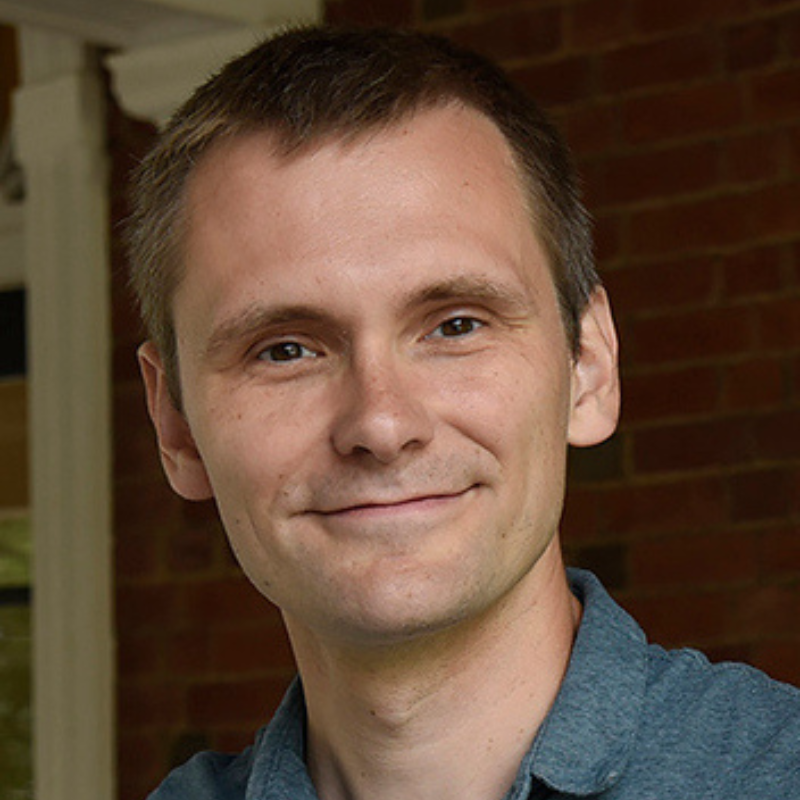
Todd Fruth
Tenor

Alex O’Neil
Tenor
Alex O’Neil studied music education and vocal performance at CCSU. He has studied the tenor voice with Jack Pott and the countertenor voice with Benjamin Rauch. He enjoys the opportunity to sing multiple voice parts, especially within the same performance. Alex performs in multiple professional ensembles, including Voce, CONCORA, Hartford Chorale, and recently participated in his debut performance at Carnegie Hall with Voices of Concinity. Alex is a tenor section leader at Immanuel Congregational Church, and works at Wesleyan University as the ITS service desk manager.
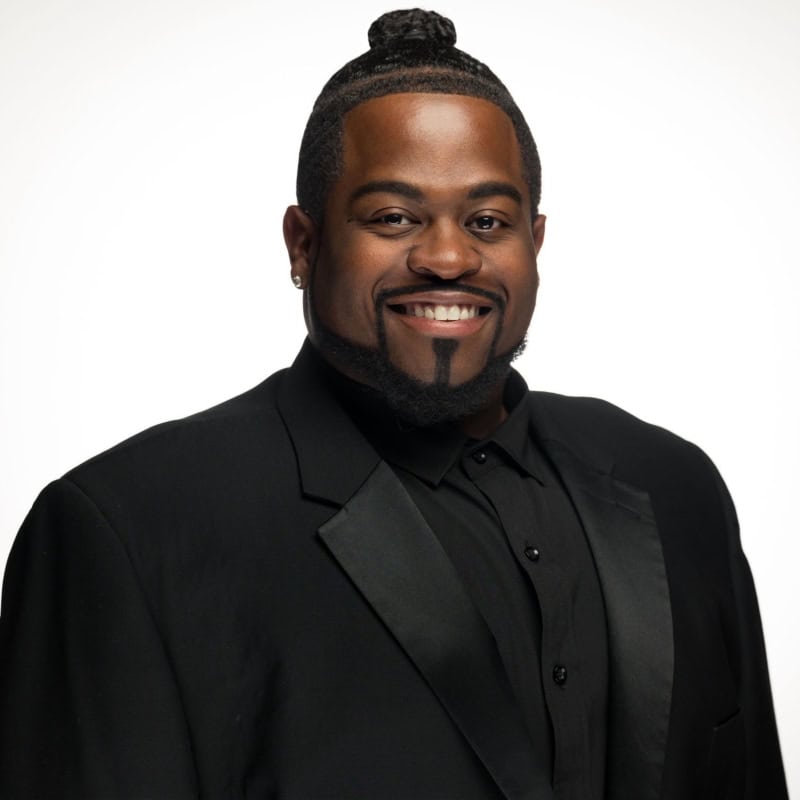
Jermaine Otis Woodard Jr.
Baritone
Virginian baritone & recording artist, Jermaine Otis Woodard Jr., is in demand, soaring through an eclectically versatile soloist & ensemble career. His current roster portfolio includes Voices of Concinnity (Navona Records), CONCORA, Voce Inc. (Signum Records), Cathedral of Saint Joseph’s Schola Cantorum/Cathedral Quartet, Berkshire Opera Festival, and Composer’s Choir. Woodard highly enjoys being a recurring background vocalist in Javier Colon’s live band (inaugural winner of NBC’s “The Voice”); recently soloing alongside Javier at Infinity Music Hall Hartford. In November 2022, Woodard inaugurated the leading role -Bailey- in ‘Magic: A Ballroom Musical’, a musical premiere by James Gadzik.
Woodard actively serves as Baritone Section Leader & Soloist at Asylum Hill Congregational Church, Crescendo Inc, and the Hartford Chorale; additionally, offering scholarship to the board of governors for the Hartford Chorale and Consonare. Woodard is regularly committed to cantorial leadership and ministry at Sacred Heart Parish Bloomfield and Cathedral of Saint Joseph.
Noteworthy engagements: An American Requiem (Edward Tyler) | SOLOIST | CONCORA {World Premiere}; La Traviata (Verdi) | COMMISSIONARIO | Berkshire Opera Festival; Rappresentatione di anima et di corpo (Cavallieri) | CONSIGLIO | Crescendo; Te Deum (Charpentier) | BASS 1 SOLOIST | Music Worcester; Petite Messe Solennelle (Rossini) | SOLOIST | Mystic River Chorale; Shell Shaker: A Chickasaw Opera (Jerod I. Tate) | CHATAH/NANI’/FISH | Mount Holyoke College {East Coast Premiere}; Magnificat, BWV 243 (Bach) // Messiah (Händel) | SOLOIST | Waterbury Symphony Orchestra; Fauré Requiem | SOLOIST | The Hartford Chorale; St. John Passion (Bob Chilcott) | JESUS | Asylum Hill Music & Arts; Passio (Pärt) | JESUS | CONCORA; L’Italiana in Algeri (Rossini) | HALY/ALI | Opera Theatre of Connecticut; A Passion for the Planet (Geoffrey Hudson) | SOLOIST | CONCORA {East Coast Premiere}; Messiah (Händel) | SOLOIST | Music Worcester; In Search of the Bridges (John Meyers) | SOLOIST | Crescendo {World Premiere}.
Follow • Facebook: Jermaine Woodard Jr. • Instagram: @jermaineowjr • Album Credits—Featured *Soloist: Voices of Concinnity | Awaiting Golden Light | *Breadth of Blossoms; Hartford Chorale | 50th Anniversary Concert (Live) | *Fare Ye Well; Andrey Stolyarov | A Sonic Tapestry | *Home

Gregory Flower
Bass-Baritone
As a bass-baritone, Greg has been praised for his “rich and powerful voice,” (Cape Cod Times) captivating audiences across the region in performances spanning opera, operetta, musical theatre, oratorio, art song, and choral masterworks. He has become a go-to collaborator for many conductors, valued for his versatile technique, keen musicianship, and profound dedication to character and text. Freelance solo oratorio highlights include Elijah in Mendelssohn’s Elijah, Handel’s Messiah, Duruflé’s Requiem, Mozart’s Requiem, Fauré’s Requiem, Haydn’s The Creation, Jesus in Dubois’ The Seven Last Words of Christ, Beethoven’s Symphony No. 9 and many works J.S. Bach . Greg has been a featured soloist in symphonic masterworks with the Hartford Chorale, Farmington Valley Chorale, New Haven Chorale, New Haven Symphony, New England Symphony, Greater Middletown Chorale, Manchester Symphony and Chorus, Farmington Symphony, New Britten Symphony, Eastern Connecticut Symphony and Chorus, The Hart School of Music, The University of Connecticut, Yale School of Music, and many more. He was a national finalist in the Collegiate Division of the Classical Singer Competition in 2014. Greg regularly performs(ed) with leading professional ensembles, including Concora, Voce, Alchemy, Voices of Concinnity, Novi Cantori, and the Schola Cantorum at the Cathedral of St. Joseph.
Opera and operetta highlights include Aeneas in Purcell’s Dido and Aeneas and “Pa” Ferguson in the world premiere of Douglas Buchanan and Caitlyn Vincent’s Bessie and Ma (both with UConn Opera), Cadmus in Handel’s Semele (Simsbury Opera), Frank Maurrant in Weill’s Street Scene (Hartt Opera Theatre), Dr. Falke in Strauss’s Die Fledermaus (Hartt Opera Theatre), and Lord Mountararat in Gilbert & Sullivan’s Iolanthe (College
Light Opera Company). Musical‑theatre credits feature Tevye in Fiddler on the Roof (College Light Opera Company), Mr. Maraczek in Bock & Harnick’s She Loves Me (College Light Opera, UConn Opera), Jamie in Jason Robert Brown’s The Last 5 Years, Man 2 in Brown’s Songs for a New World (Branch River Theatre).
As a conductor and educator, Greg currently teaches choral music and music theory full time at Southington High School, and is the Director of Music at the Congregational Church in South Glastonbury, CT, where he curates vibrant, meaningful worship through choral leadership and community engagement. Previously, Greg has worked at Loomis Chaffee School and The Hartt School Community Division as a voice teacher, The University of Connecticut as a teaching assistant, Regional District 17, teaching middle school chorus full time, and St. Mark The Evangelist Church in West Hartford as Music Director and Organist. In Greg’s tenure at RSD17, his top choirs earned top honors in competition each year, and he consistently had at least 30 students participating in regional music festivals. At Southington High School, he has grown the choral department from 27 students to nearly 80 students in 3 years. Greg has had students from multiple positions attend High School All State, get a 4 or 5 on their AP Theory Exam, and go on to major in music in college. Greg transitioned from church singer to church director in 2017, when he began as organist for St. Mark the Evangelist, where he also directed the choir. In his time at CCSG, Greg has managed one of the largest congregational choirs in the state, started an annual Messiah Sing, rejuvenated the children’s’ music ministry, curated the monthly concert series, and produced and/or conducted larger concerts – including Faure Requiem with the church choir and collaborations on with professional colleagues from other churches and choral ensembles.
Greg’s compositional output is mostly either music he wrote for fun, or for function in religious worship. That said, he is interested in exploring more opportunities as a composer. He is credited on IMDB as a film composer for his work on the 1920’s Jazz-inspired Musical, Speak Easy To Me. Favorite compositions include: The Four Seasons of Robert Frost (choral), String Quartet No. 1, Fugue on “Truro” (Brass Quartet), Je Vous Salue
Marie pour Notre Dame (choral).
Mechanics Hall
321 Main Street Worcester, MA 01608
Mechanics Hall, built in 1857, is a four-story structure that remains an incredible venue for live music. Renowned for its acoustics, it is located in downtown Worcester just blocks away from Route 290.
SEATING
Seating in the floor level of the Great Hall is accessible via elevator, by the Waldo St. entrance to the building. The balcony is not accessible by elevator. Read more about accessibility here.
We suggest parties with small children sit in our side balconies whenever possible, as they provide the best view for small children who may not have a clear view from the flat seating on the floor level.
Balcony seating has less leg room. If you’re a taller patron, we recommend floor seating or choosing an aisle seat in the balcony section.
PARKING
The closest parking garage is Pearl Elm Garage (20 Pearl St.) Music Worcester offers free parking for Mechanics Hall presentations – read more here. There is also on-street parking on neighboring streets.
321 Main Street
321 Main Street, Worcester, MA 01608, USA
BWV 124: Meinen Jesum laß ich nicht
The Feast of Epiphany is celebrated on 6 January, the twelfth day of Christmas. But the word also refers to the season between Christmas and Ash Wednesday, with anywhere from four to nine Sundays, depending on when Easter falls in that year. In 1725, Epiphany was on Saturday, so the first Sunday after Epiphany was 7 January, the date for which this cantata was composed. It is based on a 1658 chorale text which is unified by the repetition of the line “I will not let go of my Jesus” at the end of each stanza.
The Leipzig parishioners heard BWV 123 on the previous day, with the theme of leaving the world behind. BWV124 picks up where Bach left off on the day of Epiphany: the believer now vows never to let go of their newfound treasure. This theme comes from the Gospel reading for the day, in which Mary and Joseph lose sight of the twelve-year old Jesus; after a time of panic, they find him teaching at the Temple.
After the Leipzig choir and orchestra’s busy season of Christmas, this cantata requires a smaller performing force than would have been heard in the previous weeks. The solo oboe d’amore does yeoman’s duty, however: the highly soloistic opening choral movement and subsequent tenor aria place great demands on the player, accompanied by a small string ensemble. The first movement shows off the oboe d’amore to great effect: after the gracious minuet-like opening, the oboe plays a great deal of melismatic material throughout the movement. The choral parts are quite simple, with the sopranos singing the melody about a homophonic setting of the chorale. The six phrases of the chorale are punctuated by reiterations of material from the opening ritornello.
After pledging to stay with Jesus in his recitative, the tenor sings an aria with the solo oboe d’amore in which he declares that he will cling to Jesus at the “stroke of death”. Bach uses the key of F# minor to draw a connection between the believer’s death and Christ’s crucifixion, since sharps were associated with the cross in the Baroque lexicon. Bach adds another element: he uses the Baroque convention of a repeating string figuration to represent the fear and terror mentioned in the text. The wide-ranging oboe part is full of pathos and a dark sense of foreboding. Bach uses descending sequences to represent the descent into death, though a modulation to the relative A major after the declaration “I will not let my Jesus go” lends a momentary sense of triumph to the otherwise tempestuous aria.
If the tenor aria is about the valley of life, then the bass recitative which follows leads from that valley (by way of a major scale) to the peaks of heaven. Its pair, the vivacious soprano-alto duet, is the resolution of the tenor aria, in which the performers sing breathlessly of their hurried retreat from the world and towards Jesus. Bach uses canonic writing to represent the idea of haste and following. The cantata comes full circle by returning to E major in the final chorale, a triumphant homophonic setting. The bass part moves by eighth-notes throughout, often representing walking and pilgrimage in Bach’s music.
BWV 14: Wär Gott nicht mit uns diese Zeit
The length of time between Ash Wednesday and Easter—forty days—is constant in the liturgical calendar. However, since the date of Easter changes every year, it is the number of Sundays in the Epiphany season that changes to accommodate the placement of Easter. Since Easter was early (1 April) in 1725, there was no Epiphany 4 cantata needed for the 1724-25 cycle of cantatas. Consequently, it wasn’t until 1735 that Bach composed BWV 14. This fact is important because it makes this cantata one of the latest extant church cantatas that have survived from Bach’s pen. Though only five movements long, it is a particularly dense cantata, and the first movement in particular is unique in Bach’s output for its complexity, both musically and theologically.
The appointed Gospel reading, Matthew 8:23-26, tells the story of Jesus calming the seas when the disciples become frightened in a storm. The theme that God guides our life, and that we are lost without him, resounds throughout the entire cantata. In the first movement, Bach uses Martin Luther’s 1524 hymn, an adaptation of Psalm 124. The chromaticism of the Luther’s melody lends itself to the theme of affliction and pursuit by our enemies, and Bach constructs a very long movement to develop those ideas further. Rather than using the Baroque stile concertante, Bach uses the stile antico style redolent of Renaissance polyphony. We often see this when Bach is referring to Old Testament themes—in this case, God’s special stewardship of Israel. Using polyphony, Bach sets each line of the chorale in pairs, with one voice singing the chorale melody as Luther wrote it, and the other singing the inversion of the tune—the notes going down where they originally would have gone up, for example. Then the other pair of voices enter in canon, doing the same thing. In this way, Bach is developing the conditional “If God were not with us at this time”: the literal statement of the tune is what has happened, while its inversion is what would have happened. Halfway through each section, the oboes enter above the vocal polyphony, playing the chorale melody in long notes. This five-part polyphonic setting is the mature Bach at his best; the complexity of this writing is as impressive as what can be found in the B Minor Mass or Art of the Fugue, and reflects Bach’s growing interest in arcane musical forms. But through it all, he also communicates intensely emotional ideas of pursuit, destruction and deliverance.
The soprano aria that follows is as sunnily Baroque as the first movement is darkly Renaissance. In this movement, the enemies still rage—in this case, in scalar sixteenth-note patterns in the strings—and the soprano sings that “we are too weak to withstand the enemy.” But God’s victory is found in the Christian’s humility and weakness, represented by the light soprano voice, and the triumphant music confirms that the enemies are held at bay. This cantata made its debut only weeks after the Christmas Oratorio was composed; the use of horn or trumpet in this aria is reminiscent of the trumpet in Grosser König, in which the trumpet satirized the pomposity of the power of man compared to the humility of the infant Jesus.
The next recitative-aria pair amplifies further the ways in which God saves his people from destruction. In the tenor recitative, the cello depicts the enemies’ rage “like a wild torrent.” Its companion bass aria, set in a gavotte-like rhythm, continues this image of “wild waves,” seen in undulating melismas. The two oboes dance around one another, again representing the raging of the enemies, while the stentorian bass sings in longer tones of God’s protection. This movement, more than the others, is a musical depiction of Christ—always presented as a bass in Bach’s vocal works— calming the waters for his disciples.
The closing chorale, a song of praise and thankgiving for God’s saving grace, is a four-part setting of the Lutheran hymn presented in polyphonic form in the first movement.
BWV 144: Nimm, was dein ist, und gehe hin
This cantata dates from the first of Bach’s three annual cycles of cantatas, tied to the three-year cycle of readings prescribed by the lectionary. Composed for the Third Sunday before Lent, 6 February 1724, it takes as its textual basis the Gospel for the day. In this Gospel, Matthew 20: 1-16, a landlord hires a group of workers to labor in his vineyard. He hires some early in the morning, others a few hours later, another group a bit later, and then one more at the “eleventh hour”. When they are paid at the end of the day, all of the workers are paid the same amount. When the full-day workers complain that the part-time workers were paid the same amount, the landlord replies, “Take what belongs to you and go; I choose to give to this last as I give to you. Am I not allowed to do what I choose with what belongs to me?” The anonymous librettist develops from this passage the theme that the Christian should be content with what God has given him or her—that God’s will is the best thing that can happen.
The first movement is a motet fugue on the text “Take what is yours and go away.” It is the words gehe hin—“go away”—that generate the most energy for the movement, with the rhythmic repetition of the words acting as episodic material. The beautiful alto aria that follows establishes the theme of contentment with God’s will. The idea of “murmuring”—grumbling that we don’t get what we want—is depicted by the pulsing eighth-notes in the lower strings. In the B section, expressing the idea that contentment with one’s lot brings peace, the murmuring strings are silenced. The movement is crafted as a minuet, the use of a worldly dance form perhaps suggesting that the believer will not find peace in the world, but only in turning from worldly things to God’s kingdom.
The texts of the two chorales in this cantata are strikingly similar: God’s will is best; and He will help those who trust him. The first chorale is the first verse of a 1675 hymn by Samuel Rodigast, and the closing chorale is the opening verse of a 1547 chorale penned by Duke Albrecht of Prussia.
The tenor recitative contrasts the contentment of the man who accepts God’s will with the lack of peace (symbolized by the introduction of a diminished chord) for those who try to have their own way. The soprano aria extols the virtues of contentment, which can “give pleasure amid the greatest sorrow”. This is a particularly peaceful aria for soprano, oboe d’amore and continuo. The opening motive, outlining a B minor arpeggio with a turn, is used throughout to depict contentment—Genügsamkeit.
BWV 121: Christum wir sollen loben schon
This cantata, written for 26 December 1724, is a deeply introspective work, pondering the mystery of the incarnation. It is not like the immediately accessible cantatas from the Christmas Oratorio; instead, its basis is theological rather than narrative. Bach uses such elements as the choice of keys, choice of compositional forms and complex musical devices in much the same way that a great preacher would have used rhetorical devices to explicate his texts and to draw broad doctrinal analogies. That such an approach was conscious is thoroughly documented: Bach was intensely proud of his knowledge of theology, and left an extensive theological library when he died.
The opening chorus uses the same Palestrina-like stile antico that we saw in BWV14. The archaic reference is doubled here: in addition to using the Renaissance-style imitative counterpoint, Bach has also chosen an ancient hymn, “Christen wir sollen loben schon” as the basis for the chorale-prelude. This is one of a handful of chorales that Martin Luther took over from the original Latin repertoire, in this case a reworking of “A solis ortus cardine.” Its ancient flavor comes from its use of two modes; it begins in the Dorian, and ends in the Phrygian. This makes the movement sound rather ascetic, while at the same time giving Bach many opportunities for harmonic color. This may be a song of praise, but its praise to an ancient, severe God: an Old Testament sovereign.
So many of Bach’s tenor arias seem to grapple with deep theological issues; in this aria, the tenor states that we can only understand the mystery of incarnation with wonder, not with reason. The alto expands on this theme in the following recitative, asking why God, whose identity knows no bounds, would choose to appear on earth in the humblest of forms.
If the use of modes and minor keys in the first three movements refers to the unfathomable, then the shift to the major key for the bass aria signals man’s faithful acceptance of the miracle itself. This is a charming aria, full of text-painting. The opening leap and upward scale is a musical depiction of John the Baptist leaping in the womb; the repeated bass notes and rocking string syncopations above it represent the cradle to which the believer hastens.
The recitative and final chorale show the believer’s joy, and offer the congregation’s thanksgiving. Although the final chorale—a harmonized version of the tune heard in the first movement—is still modal in design, Bach’s harmonies transform it from the ascetic to the triumphant.
BWV 3: Ach Gott, wie manches Herzeleid
Although the Gospel reading for the Second Sunday after Epiphany relates the story of the wedding at Cana, the anonymous librettist for this cantata chose instead to focus on the chorale Ach Gott, wie maches Herzeleid, based on the Latin hymn Jesu dulcis memoria. This cantata was first heard on 14 January 1725. Its theme is that however difficult life is, God comforts us in times of need.
In the opening chorus, an elegaic chorale-prelude for oboes d’amore, strings and choir, Bach sets the chorale melody in the bass part rather than the more typical soprano. There are several theological ideas presented in the complex counterpoint of the other parts. The two oboes d’amore share a deceptively beautiful theme in canon. Though the theme is achingly beautiful, it contains within it a descending chromatic line that represents the grief and tribulation spoken of in the chorale text. The interweaving of these lines, which are echoed later in the upper three voice parts, also amplifies this idea of affliction and tribulation. The strings’ main motif in the ritornello is a two-bar sighing pattern, beneath which the continuo plays an eighth-note walking theme that Bach often uses to symbolize the believer’s pilgrimage through life. These three different musical ideas recur throughout the movement, only being freed from their moorings in the final soprano line, when a melisma to a high A takes the believer to heaven.
The middle movements of this cantata are based on the chorale, though only the second movement actually quotes the chorale directly, in a 4-part setting of verse two of the chorale text in alternation with recitatives expanding upon the idea that it is difficult for sinful man to attain goodness and heaven’s blessings.
In the following bass aria, we return again to the idea that even in the midst of Hell’s fear and torment, God’s blessing is available to us. In a rather spare setting for continuo and bass soloist, affliction is again depicted through the use of chromaticism and anguished leaps in the repeated opening motif. This two-bar motif is constantly present, either in the cello or in the singer’s part, representing the inescapability of life’s tribulations. But the rugged figure is quelled when the believer calls upon God, at which point the music becomes more melismatic, melodic and diatonic.
If the first recitative-aria pair dealt with the pain of life, then the following tenor recitative and soprano-alto duet focusses more on the believer’s response to God. The tribulation figures are still present, but they recede into the background in favor of the joy and calm that come with turning to God in times of trouble. This calm is beautifully depicted in the duet. The main theme has a distant echo of the cantata’s opening theme, with a rising fourth and some chromaticism, as well as the canonic interplay that was initially presented by the oboes d’amore. But this music is more joyful, and even becomes playful at the appearance of the word Freudigkeit, “joyfulness.” We find more chromaticism in the B section, where the text speaks of the believer’s “cross”. As is typical in Bach’s music, he uses more sharps, as the word Kreuz means both “cross” and “sharp”. But the duet is in da capo form, so it is joyfulness that wins the day, not tribulation.
The final straightforward chorale, with the melody initially heard in the bass voices in the first movement now in the soprano, resolves the battle entirely. In this short chorale, the believer asks God for purity of heart, vowing to live and die to Him alone.
– Chris Shepard