
March 21 4:00 pm
Part of Bach’s Birthday Bash Weekend
With a selection of Bach’s keyboard repertoire for harpsichord and piano, attendees will get a unique close up view of pianist Kristjon Imperio and harpsichordist Frederick Jodry. Take a peek at the hand and footwork involved in performing on keyboard instruments, and enjoy the delicate sound of the harpsichord from feet away.



French Overture in B minor
BWV 831 (Piano)
Chromatic Fantasy and Fugue
BWV 903 (Harpsichord)
Please note: program, venue, time, and artist are subject to change.
Bach's Birthday Bash Weekend Program
Artists
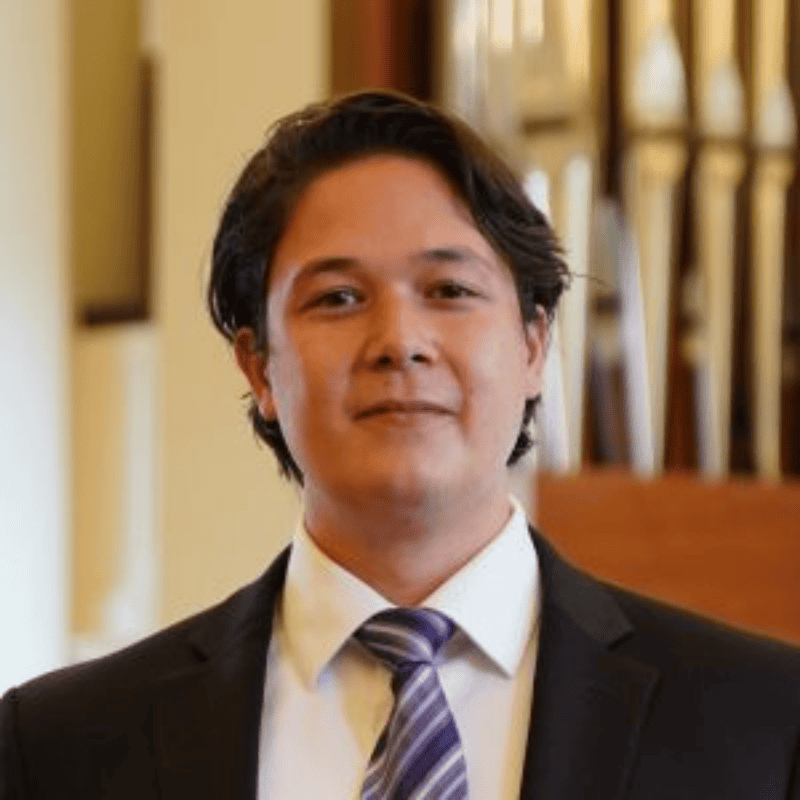
Kristjon Imperio
Piano
Boston-born Kristjon Imperio is an active organ recitalist and collaborative pianist, most recently serving on the faculty of Handel and Haydn Society in Boston. An artist with extensive range, Kristjon has performed major piano/keyboard concertos of Bach, Mozart, Beethoven, Grieg, Rachmaninoff, Tchaikovsky, and Brahms with orchestras throughout the United States. His experience as a music director includes conducting over seventy-five choral, orchestral, and handbell performances in the last two decades.
Kristjon is full-time as interim executive director at Pakachoag Music School of Greater Worcester and is organist and assistant director of music at Village Church in Wellesley & Weston. He also serves on the Worcester Chapter of the American Guild of Organists’ executive committee as treasurer and is board president of the Organ Festival of Worcester.
Beyond music, Kristjon treasures spending time with family, gardening and landscaping around home, and leading his dynasty fantasy football team.
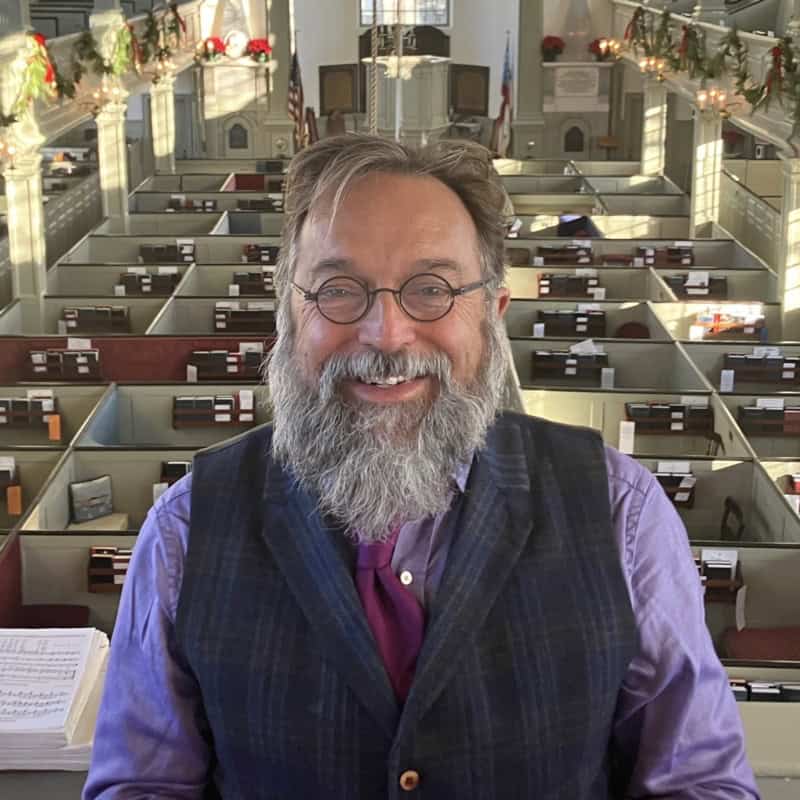
Frederick Jodry
Harpsichord
Frederick Jodry is one of New England’s most versatile musicians. He performs frequently as a keyboard recitalist, conductor, and singer. Jodry holds degrees in organ and harpsichord from New England Conservatory, where his principal teachers were Yuko Hayaski and William Porter. He has been heard in recital at the Church of the Madeleine, Paris; the Palace of the Legion of Honor in San Francisco; St Thomas Church and Trinity Wall Street, NYC; and at Cathedrals in Paris, Cleveland and Seattle. He has taught at Brown University from 1991 til 2025, and has conducted and toured internationally with the Brown Chorus on five continents. Mr. Jodry serves currently as Co-director of Music at historic Trinity Church, Newport RI.
Mechanics Hall
321 Main Street Worcester, MA 01608
Mechanics Hall, built in 1857, is a four-story structure that remains an incredible venue for live music. Renowned for its acoustics, it is located in downtown Worcester just blocks away from Route 290.
SEATING
Seating in the floor level of the Great Hall is accessible via elevator, by the Waldo St. entrance to the building. The balcony is not accessible by elevator. Read more about accessibility here.
We suggest parties with small children sit in our side balconies whenever possible, as they provide the best view for small children who may not have a clear view from the flat seating on the floor level.
Balcony seating has less leg room. If you’re a taller patron, we recommend floor seating or choosing an aisle seat in the balcony section.
PARKING
The closest parking garage is Pearl Elm Garage (20 Pearl St.) Music Worcester offers free parking for Mechanics Hall presentations – read more here. There is also on-street parking on neighboring streets.
321 Main Street
321 Main Street, Worcester, MA 01608, USA
Known as a virtuosic keyboard player throughout his life, Johann Sebastian Bach left a great amount of music for keyboard—both for organ and for harpsichord. It is thought that these works are, above all, pedagogical in nature. He certainly taught his sons thoroughly, not only to play at a very proficient level, but also to compose in a variety of styles. These models, especially in the large collections that he left—such as the Well-Tempered Clavier and the four books of Clavier-Übung (literally, “keyboard exercise”)—show him exploring all the artistic and aesthetic trends of the era, such as the Italian style, the French style, the German organ mass, and the highly contrapuntal Goldberg Variations.
By chance, we have the great good fortune of hearing both halves of the second book of the Clavier-Übung between this afternoon’s concert and this evening’s program. This afternoon, Fred Jodry plays the monumental French Overture in B minor, BWV 831, dating from 1735. Although it is called an overture, it is essentially the same as any French suite, including six dance forms. The opening is the actual overture, a form that we have already seen in THE COMPLETE BACH. This is the style perhaps most relevant to Louis XIV’s court at Versailles, with its grand, stately opening, replete with dotted rhythms and regal flourishs, followed by the traditional fugue. This evening, we will hear the Italian Concerto, BWV 971—the other side of the national stylistic coin that Bach so often liked to explore.
The Chromatic Fantasia and Fugue in D minor, BWV 903 is one of Bach’s most dramatic and virtuosic keyboard works, most likely dating from his years in Köthen. The fantasia form was designed to sound highly improvisatory, with many arpeggios, shifts in harmony, and—especially in the case of this piece—an adventurous use of chromaticism. It is followed by its exact opposite: a fugue that follows the strict, rule-bound nature of that polyphonic style. This work was actually quite well known in Bach’s lifetime, helping to cement his reputation as one of the great keyboard players of the age.
– Chris Shepard