
January 24, 2026 8:00 pm
The Winchendon Players are members of the Winchendon Music Festival, a multi-genre music festival featuring artists from across the globe. The ensemble joins The Worcester Chorus for a performance of three sections from Bach’s Christmas Oratorio – written for chamber orchestra, chorus, and soloists. The work by J.S. Bach is exuberant and boisterous; not only is this performance a joyous continuation of the holiday season, but is a great opportunity to hear The Worcester Chorus perform another large-scale choral work.
In addition to the Oratorio, the combined ensembles will also perform one of the most performed and recorded of Bach’s sacred cantatas, Ich habe genug.
The Worcester Chorus performs throughout Music Worcester’s season. Don’t miss an opportunity to hear this chorus skillfully led by Chris Shepard, in union with internationally recognized instrumentalists. Tickets to this performance include access to a pre-concert talk by Claire Fontijn.
Ich habe genug, BWV 82
Christmas Oratorio, BWV 248 – cantatas 1, 3, 5



Ich habe genug
BWV 82
Christmas Oratorio
BWV 248 – cantatas 1, 3, 5
Despite its name, Bach’s Christmas Oratorio isn’t a work written only for the holiday season. The Christmas Oratorio is a collection of six cantatas historically performed at different points throughout the Christmas/Advent season, and is divided into different sections that tell the Nativity story (similar to Handel’s Messiah). Composer John Harbison describes Bach’s Christmas Oratorio as Germany’s “seasonal equivalent to the English-speaking world’s Messiah” with its overarching message of jubilation and celebration.
Christmas Oratorio is preceded by Bach’s Ich habe genug (I have enough), written for bass soloist, oboe, strings, and continuo. This ~20 minute solo cantata is a sought-after work for vocalists, with its text rejecting worldly fortunes and embraces serenity. Instrumentalists provide a steady, supportive layer beneath the soloist, strengthening themes of longing and reflection.
Please note: program, venue, time, and artist are subject to change.
"J.S. Bach's Christmas Oratorio Cantatas" - Pre-Concert Talk with Claire Fontijn
Claire Fontijn is Phyllis Henderson Carey Professor of Music at Wellesley College. In 2007, she won the Nicolas Slonimsky Award for Outstanding Classical Music Biography from ASCAP/Deems Taylor for her monograph Desperate Measures: The Life and Music of Antonia Padoani Bembo. In addition to a second book on Hildegard of Bingen’s Vision of Music, she edited two volumes: Fiori Musicali with Susan Parisi, and Uncovering Music of Early European Women. She enjoys giving pre-concert lectures, most notably for the Boston Early Music Festival, Handel and Haydn Society, Cappella Clausura, and numerous gatherings of Wellesley College Alumnae.
Bach Christmas Oratorio Program
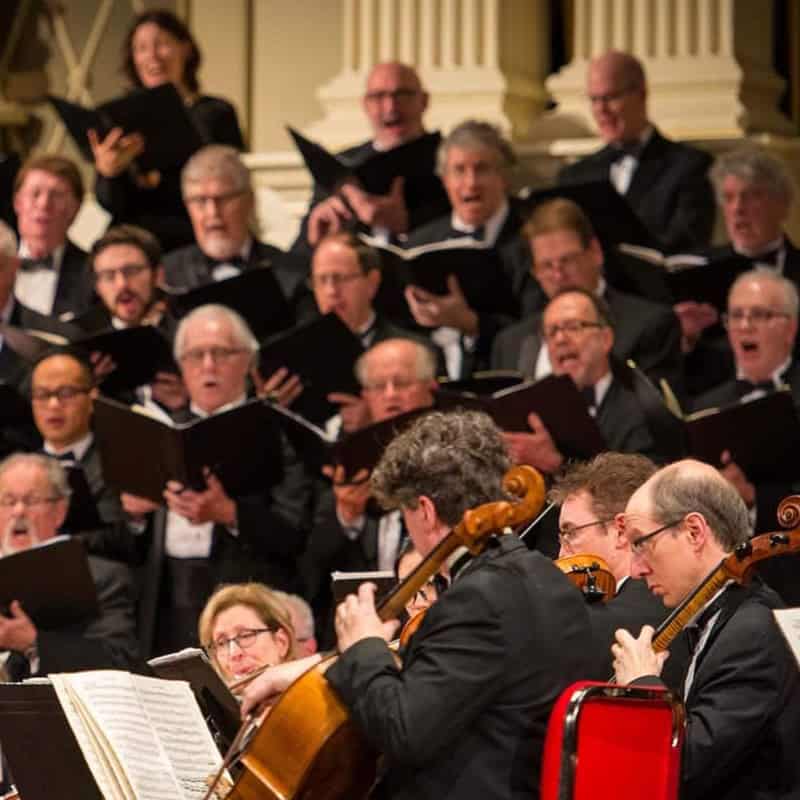
The Worcester Chorus
Ensemble
Under the baton of Artistic Director Chris Shepard and Assistant Director & Accompanist Mark Mummert, The Worcester Chorus of Music Worcester numbers approximately 100 professional and amateur singers who perform several times each year, primarily as part of Music Worcester’s season, including an annual performance of Handel’s Messiah. Their repertoire also includes other classical choral pieces, opera, musical theater, American folk songs, and more.
The Worcester Chorus is a key component of THE COMPLETE BACH, Music Worcester’s 11-year project to present all of J.S. Bach’s known works, which concludes in March 2035. A subset of the group, the Worcester Chorus Women’s Ensemble (dir. Mark Mummert) is also featured in the Music Worcester season.
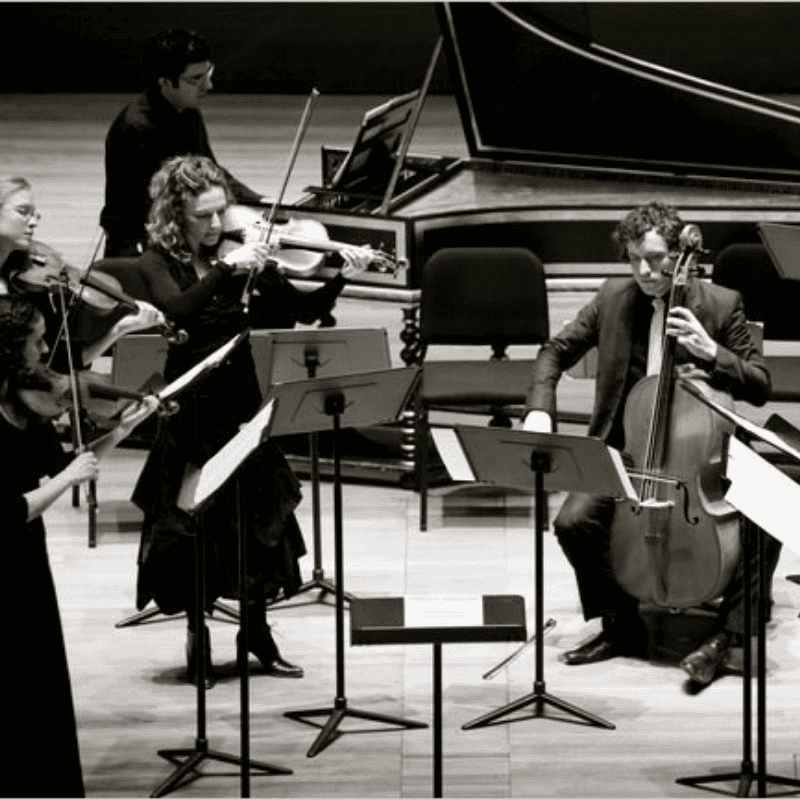
Winchendon Players
Ensemble
Since 2016, the Winchendon Music Festival (WMF) has built a series of local, national, and international artists spanning several genres—classical, folk, jazz, world, and more. Multi-instrumentalist, Andrew Arceci has performed throughout North America, Europe, and Asia. Recording credits include APM Music/Juice Music, Cedille Records, Centaur Records, Music & Arts, NPR, PRI, Silent Witness––television series by BBC One (UK), BBC Radio 3 (UK), Novum (UK), Bôłt Records/Monotype Records (Poland), Deutsche Harmonia Mundi (Germany), and Deutschlandradio (Germany). He has taught at several institutions, including Bloomsburg University of Pennsylvania, Wellesley College (Director, Collegium Musicum), and Worcester State University. Additionally, he has given lectures, masterclasses, and/or workshops at Illinois Wesleyan University, the International Baroque Institute at Longy (Bard College), the Universities of Oxford, Cambridge, Edinburgh, the Narnia Arts Academy (Italy), Institutum Romanum Finlandiae (Italy), Taipei National University of the Arts (Taiwan), and Burapha University (Thailand). Arceci was a Visiting Fellow at Harvard University’s Center for Middle Eastern Studies during the 2019-2020 academic year.
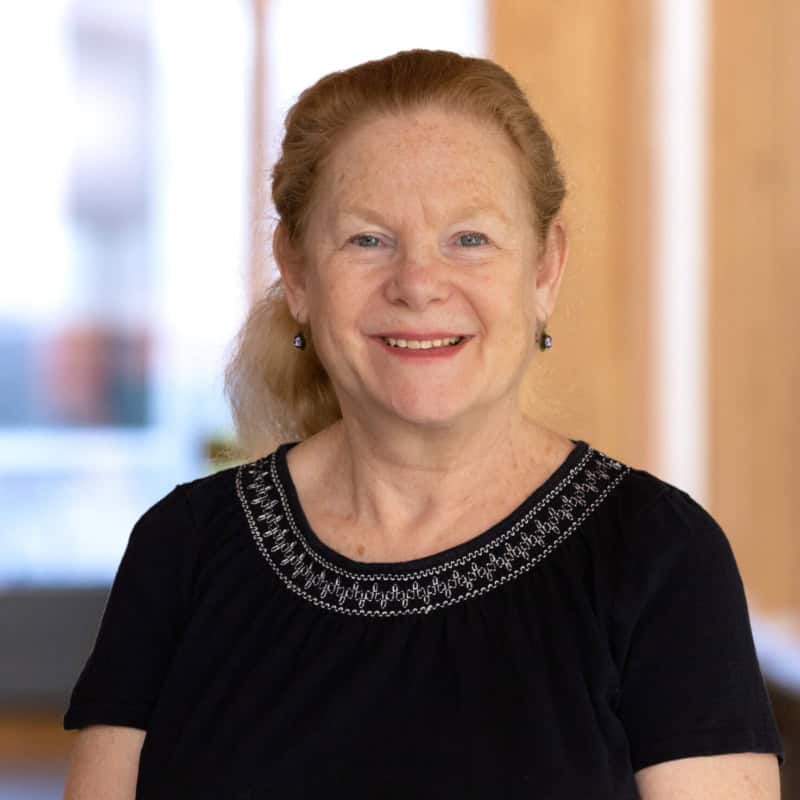
Claire Fontijn
Pre-concert talk speaker
Claire Fontijn is Phyllis Henderson Carey Professor of Music at Wellesley College. In 2007, she won the Nicolas Slonimsky Award for Outstanding Classical Music Biography from ASCAP/Deems Taylor for her monograph Desperate Measures: The Life and Music of Antonia Padoani Bembo. In addition to a second book on Hildegard of Bingen’s Vision of Music, she edited two volumes: Fiori Musicali with Susan Parisi, and Uncovering Music of Early European Women. She enjoys giving pre-concert lectures, most notably for the Boston Early Music Festival, Handel and Haydn Society, Cappella Clausura, and numerous gatherings of Wellesley College Alumnae.
Soloists
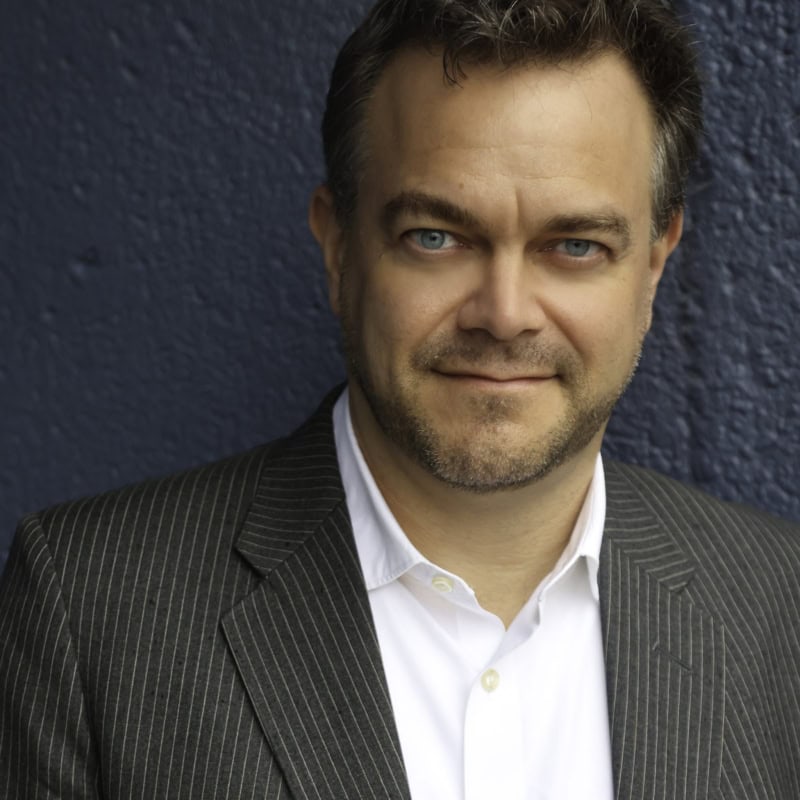
Charles Blandy
Tenor
Charles Blandy has been praised as “unfailingly, tirelessly lyrical” (Boston Globe); “fearless” (New York Times); “a versatile tenor with agility, endless breath, and vigorous high notes” (Goldberg Early Music Magazine); and for his “clear, focused, gorgeous tenor voice” (Worcester Telegram and Gazette).
He makes his Boston Symphony Orchestra/Carnegie Hall debut in 2024 in Shostakovich’s Lady Macbeth of Mtsensk. He is a core member of Emmanuel Music, and regularly appears in their ongoing Bach Cantata series. With Emmanuel he performed at BachFest Leipzig; and has sung the Evangelist in Bach’s St. John and St. Matthew Passions, and lead roles in Stravinsky’s The Rake’s Progress, Mozart’s Abduction from the Seraglio and The Magic Flute, and Handel’s Ariodante.
He has performed Bach’s B minor mass with Orchestra Iowa; the Apollo Chorus of Chicago; and the American Classical Orchestra (NYC) at Lincoln Center. He sang Handel’s Messiah with Saint Paul Chamber Orchestra; Monteverdi’s Il Ritorno d’Ulisse, Vespers of 1610, L’Orfeo, and assorted madrigals with Boston Early Music Festival; Messiah and St. Matthew Passion with the American Bach Soloists (SF, CA). He has appeared with the Bach Choir of Bethlehem, Handel and Haydn Society, Boston Baroque, Music of the Baroque (Chicago), Rhode Island Philharmonic, and Charlotte Symphony.
He gave the US premiere of Gerald Barry’s Canada at the Tanglewood Festival of Contemporary Music. With Boston Modern Orchestra Project he recorded Wuorinen’s Haroun and the Sea of Stories; and Virgil Thomson’s Four Saints in Three Acts. With Collage New Music he recorded Rodney Lister’s chamber song cycle Friendly Fire, and gave the US premiere of Rautavaara’s song cycle Die Liebenden.
A recitalist of wide repertoire, he has performed Schubert’s Schwanengesang at the Token Creek Festival (WI) and at Tufts University; Winterreise at Tufts; Auf dem Strom and Brahms songs with Boston Chamber Music Society; and songs of Finzi and Janacek’s Diary of One Who Disappeared at Monadnock Music (NH). He gave recitals of contemporary American songs in New York, Boston, London and Manchester UK, with Rodney Lister at the piano. Charles Blandy is a member of Beyond Artists, a coalition that supports good causes through their work. He studied at Oberlin College, Indiana University, and Tanglewood Music Center. He is the product of a strong public school arts program in Troy NY.
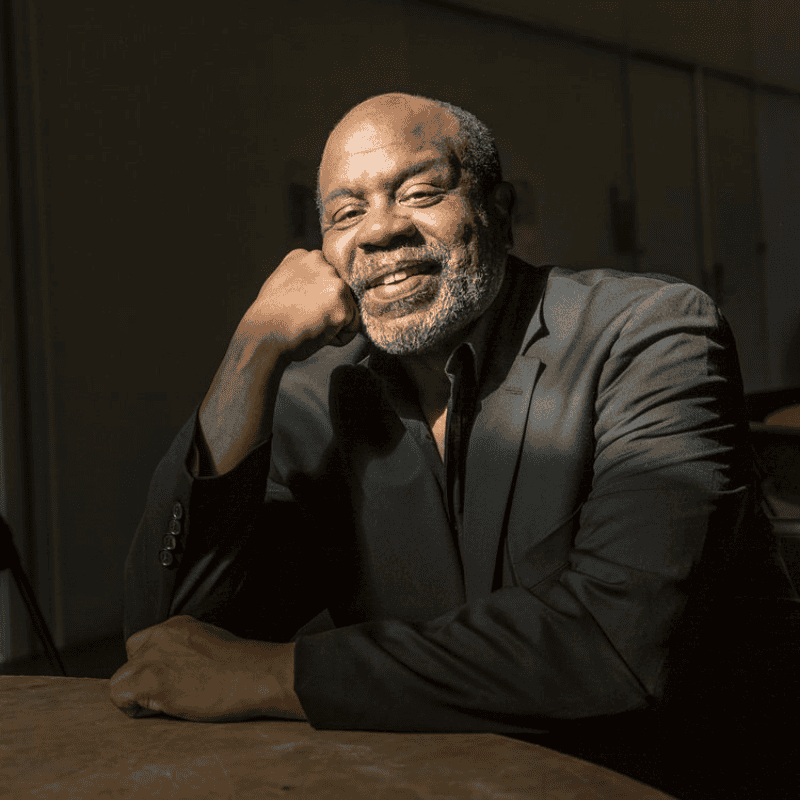
Kevin Deas
Bass-Baritone
Kevin Deas has gained international renown as one of America’s leading bass-baritones. He is perhaps most acclaimed for his signature portrayal of the title role in Porgy and Bess, having performed it with the New York Philharmonic, Philadelphia Orchestra, National Symphony, St. Paul Chamber Orchestra, Pacific Symphony, as well as the most illustrious orchestras on the North American continent, and at the Ravinia, Vail and Saratoga festivals.
Kevin Deas’ 2023-24 season includes performances of Mozart’s Requiem with the Vermont Symphony and Mobile Symphony, Handel’s Messiah with the North Carolina Symphony, National Cathedral, Houston Symphony, and the NAC Orchestra in Ottawa. Other notable performances in the season include a Gershwin program with Oregon Symphony and Rochester Philharmonic, Beethoven’s Symphony No. 9 with the Pacific Symphony, Brahms’s German Requiem with Long Beach Symphony Orchestra, and will be performing the role of Commendatore in Mozart’s Don Giovanni with Boston Baroque, as well as the role of Dick Hallorann in Paul Moravec’s critically acclaimed opera The Shining with the Opera Atlanta. Other recent highlights include performances with New York Philharmonic, Toronto Symphony, Minnesota Orchestra, Dallas Symphony, San Diego Symphony, Seattle Symphony, Portland Symphony, Minnesota Orchestra, Buffalo Philharmonic, Phoenix Symphony, Virginia Symphony, Colorado Symphony, Omaha Symphony, and Jacksonville Symphony.
A proponent of contemporary music, Kevin Deas has performed Menotti’s Amahl and the Night Visitors at Italy’s Spoleto Festival, Derek Bermel’s The Good Life with the Pittsburgh Symphony, and Hannibal Lokumbe’s Dear Mrs. Parks with the Detroit Symphony. He also enjoyed a twenty-year collaboration with the late jazz legend Dave Brubeck.
Kevin Deas has recorded Wagner’s Die Meistersinger (Decca/London) with the Chicago Symphony under Sir Georg Solti and Varèse’s Ecuatorial with the ASKO Ensemble under Riccardo Chailly. Other releases include Bach’s Mass in B Minor and Handel’s Acis and Galatea (Vox Classics); Dave Brubeck’s To Hope! with the Cathedral Choral Society (Telarc); Haydn’s Die Schöpfung with the Virginia Symphony and Boston Baroque (Linn Records); and Dvorák in America (Naxos).

Louise Fauteux
Soprano
Acclaimed for her beautiful clarion tone, power and intuitive musicianship, soprano Louise Fauteux is delighted to return to Music Worcester. Recent performances include Handel’s Dixit Dominus in this same venue, Mozart’s K.339 Vesperae Solenne de Confessore with Con Brio, Bach BWV 191 with the Greater Middletown Chorale, and the Coffee Cantata BWV 211 for “The Complete Bach” initiative. Ms. Fauteux made her Carnegie Hall debut in The Messiah in 2022. Career credits include a solo role in Peer Gynt with the New York Philharmonic and actor John de Lancie and a theatrical version of the St. Matthew Passion directed by Jonathan Miller. Honors include a Virginia Best Adams fellowship with the Carmel Bach Festival, national semifinalist for the MacAllister Awards, and a scholarship from Connecticut Opera.
Ms. Fauteux received her master’s degree in Vocal Performance and Pedagogy from Westminster Choir College and studied voice with Nan Nall, Laura Brooks Rice and Arthur Levy. Her vocal students have received various awards and scholarships and have gone on to the Merola Program, Tanglewood, Hartt School of Music, Westminster Choir College, UCONN, Eastman and Oberlin. After many years with the Hartt School of Music Community Division, Ms. Fauteux pivoted to serving Hartford youth instructing at A.I. Prince Technical High School. She is also a section leader for both the Greater Middletown Chorale and the Church of St. Peter Claver in West Hartford, CT.
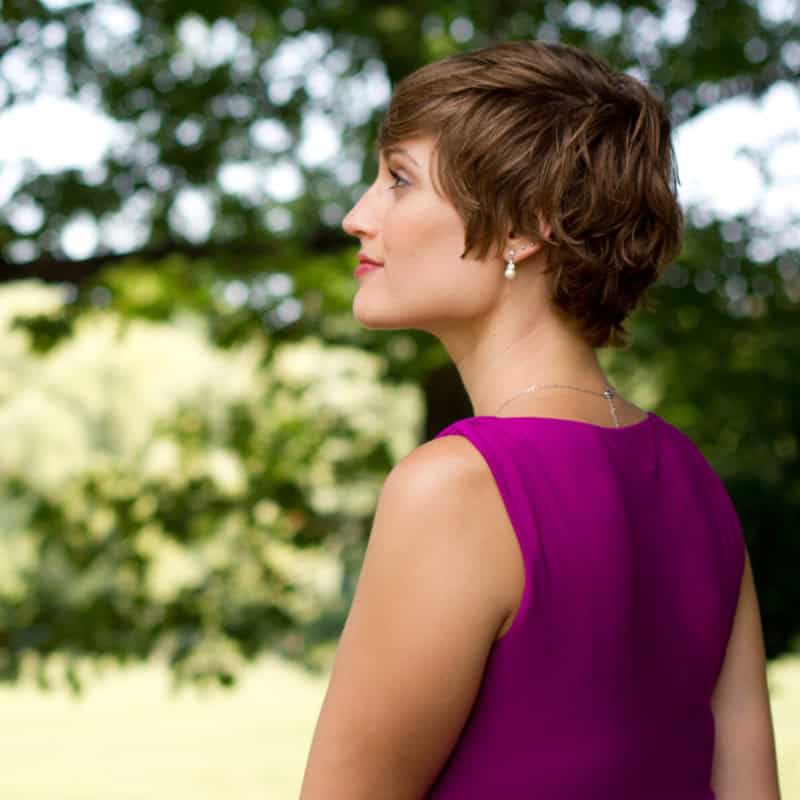
Megan Roth
Mezzo-Soprano
Praised for her “versatile voice” and “rich character portrayals,” mezzo-soprano Megan Roth brings vibrant artistry and emotional depth to every performance. She engages audiences across opera, oratorio, art song, and chamber music, with a repertoire spanning early music to contemporary works. Recent operatic highlights include three role debuts with activist opera company White Snake Projects, a dramatic portrayal of La mort de Cléopâtre with the New England Repertory Orchestra, and acclaimed performances as Tisbe in La Cenerentola and Despina in Così fan tutte with Boston Midsummer Opera. Other roles include Rosina (Il barbiere di Siviglia), Meg (Little Women), and Dorabella (Così fan tutte), as well as appearances in Maria Padilla, Béatrice et Bénédict, Trouble in Tahiti, and Giulio Cesare.
On the concert stage, Megan has appeared as soloist in Copland’s In the Beginning, Handel’s Messiah, and Handel’s Dixit Dominus. Her repertoire includes major works by Bach, Mozart, de Falla, and Duruflé. Megan is the founder and artistic director of Calliope’s Call, a New England-based ensemble known for its innovative, culturally resonant art song programming. She also thrives in chamber music settings, performing regularly with top national ensembles including the GRAMMY®- nominated Skylark Vocal Ensemble, Yale Choral Artists, Spire Chamber Artists, Upper Valley Baroque, and True Concord. She was featured as a violin soloist on Skylark’s GRAMMY®- nominated album It’s a Long Way. She holds degrees from Florida State University (M.M., Artist Certificate in Opera) and DePaul University (B.M. in Violin Performance with honor), and has been recognized by The American Prize in multiple categories.
Outside of music, Megan enjoys yoga, contemporary fiction, and kayaking with her husband and their Boston Terriers, Bronx and Brooklyn.
Conductor
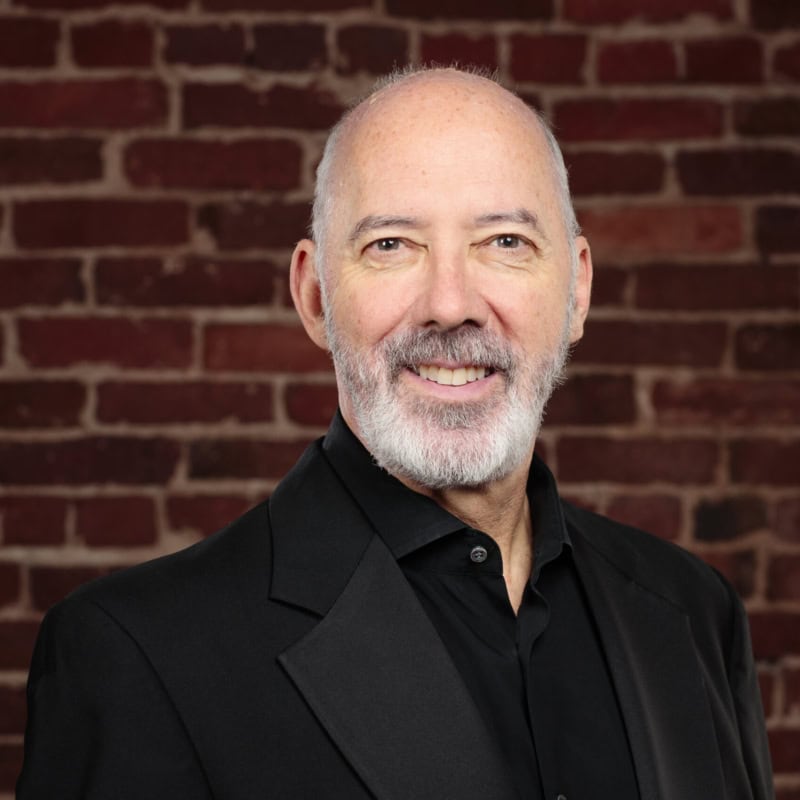
Chris Shepard
Conductor
Now in his sixteenth year as Artistic Director of the Worcester Chorus, Chris also serves as conductor of the Connecticut Choral Artists (CONCORA), Connecticut’s oldest professional choir. In May 2024, Chris launched THE COMPLETE BACH, a 132-concert project to present live performances of all of J.S. Bach’s works for the first time ever in America. This monumental undertaking, under the auspices of Music Worcester, was inspired by Chris’s BACH2010 project, in which his Sydneian Bach Choir and Orchestra performed all of Bach’s choral cantatas in Sydney, Australia. THE COMPLETE BACH brings together local ensembles as well as internationally recognized performers such as pianists Jeremy Denk and Simone Dinnerstein, and Boston’s Handel & Haydn Society and Emmanuel Music.
His musical interests hardly stop in the eighteenth century, however. Chris has conducted much of the most prominent largescale choral-orchestral repertoire, including major works by Haydn, Mozart, Beethoven, Rossini, Mendelssohn, Brahms, Fauré, Vaughan Williams, Britten, Poulenc, and Britten; a career highlight was the 2022 performance by the Worcester and Masterwork Choruses of Verdi’s Requiem at Carnegie Hall. He has also performed many works by contemporary composers and has premiered works by such composers as Ricky Ian Gordon, Gwyneth Walker, Martin Sedek, Robert Convery, Anna K Jacobs, and Amy Bernon. His choirs have collaborated with a number of orchestras, such as the Juilliard Orchestra, the Orquestra Sinfónica Nacional de Mexico, and the Hartford Symphony Orchestra, in venues that include Carnegie Hall, Lincoln Center and Radio City Music Hall in New York, as well as the Royal Festival Hall in London and the Palacio de Bellas Artes in Mexico City. Chris has prepared choirs for major international conductors, including Yannick Nézet-Séguin, Simone Young, Carlos Miguel Prieto, and William Boughton, as well as for Broadway legend Patti Lupone and Ray Davies of the Kinks. For a decade, Chris was conductor of the Masterwork Chorus in New Jersey, with whom he performed Handel’s Messiah annually at Carnegie Hall; he also led the Dessoff Choir in New York City from 2010 to 2016. Chris made his conducting debut with the New Haven Symphony in 2015.
A committed music educator, Chris has served on the faculty of the Taft School, Sydney Grammar School, Hotchkiss Summer Portals, and Holy Cross College. He founded the Litchfield County Children’s Choir in 1990, and has conducted numerous middle and high school regional and All-State choirs in New England, New York and Australia. He presented two documentaries with SBS-TV, an Australian national public television network, and has given several presentations at conferences for American Choral Directors Association and Australian National Kodàly Association. Chris has been a guest conductor at Emmanuel Church in Boston, a church renowned for its five-decade Bach cantata project, and he currently serves as Music Director of St John’s Episcopal Church in Stamford, Connecticut.
A pianist and keyboard continuist, Chris holds degrees from the Hartt School, the Yale School of Music (where he studied choral conducting with Marguerite Brooks) and the University of Sydney. He researched the performance history of Bach’s B Minor Mass in New York City for his PhD in Musicology; his dissertation won the American Choral Directors Association’s 2012 Julius Herford Prize for outstanding doctoral thesis in choral music.
Mechanics Hall
321 Main Street Worcester, MA 01608
Mechanics Hall, built in 1857, is a four-story structure that remains an incredible venue for live music. Renowned for its acoustics, it is located in downtown Worcester just blocks away from Route 290.
SEATING
Seating in the floor level of the Great Hall is accessible via elevator, by the Waldo St. entrance to the building. The balcony is not accessible by elevator. Read more about accessibility here.
We suggest parties with small children sit in our side balconies whenever possible, as they provide the best view for small children who may not have a clear view from the flat seating on the floor level.
Balcony seating has less leg room. If you’re a taller patron, we recommend floor seating or choosing an aisle seat in the balcony section.
PARKING
The closest parking garage is Pearl Elm Garage (20 Pearl St.) Music Worcester offers free parking for Mechanics Hall presentations – read more here. There is also on-street parking on neighboring streets.
321 Main Street
321 Main Street, Worcester, MA 01608, USA
CHRISTMAS ORATORIO & BWV82
PROGRAM NOTES
By Chris Shepard
BWV82: Ich habe genug
Over the years, I have had the pleasure of hearing Kevin Deas sing many times. In many ways he is the “oratorio bass-baritone” of his generation, singing with innumerable major choirs and orchestras throughout the United States and around the world—to say nothing of his operatic roles, especially as the title character in Porgy and Bess. But it was in a performance of the St Matthew Passion in Mexico City (including many singers from the Worcester Chorus) that I decided I must perform Bach with Kevin at some point. Here we finally are, more than a decade together, in a program designed around his spectacular voice, particularly with the inclusion of Ich habe genug, the great bass solo cantata.
BWV82 is justifiably one of Bach’s most beloved works, cherished for the sheer beauty of the first two arias and the thrill of the final aria. Bach himself must have highly prized this cantata, as he left three versions—for bass, soprano and alto. The earliest bass version, dating from 1727, is perhaps the most appropriate to the Gospel text’s speaker. This cantata was written for the feast of the Purification (also called Candlemas, celebrated forty days after Christmas on February 2nd), marking the presentation of the infant Jesus at the temple. In the gospel story, the elderly Simeon prophesies that he won’t die until he has seen the Messiah. When he holds Jesus in his arms, he prays the prayer that is known as the Nunc dimittis in the Roman liturgy, beginning “Lord lettest Thou Thy servant depart in peace… for mine eyes have seen Thy salvation.” The welcoming of death as release from the difficulties of this world is a recurring theme in Lutheran theology and the music of J.S. Bach, and there is a sense in this cantata that only Bach could have done this text justice.
The first aria is a haunting duet between the oboe and bass, reminiscent of “Erbarme dich” from the St Matthew Passion. Its musical theme encapsulates the yearning for release expressed in the text. The central aria is a beautiful lullaby, combining the idea of death as sleep with a more urgent middle section in which the singer rejects the world. The closing aria has a completely different character; it is a breathless gigue in which a resurrection-style upwards motive represents the soul’s ultimate release in death.
Christmas Oratorio
Background
In roughly 1734, Johann Sebastian Bach decided to write oratorios for some of the major festivals of the church year. This decision led to the composition of both the Ascension Oratorio and the Easter Oratorio, as well as the Christmas Oratorio. Similar to a work such as the monumental B Minor Mass, the Christmas Oratorio contains a combination of newly composed material as well as previously written and reworked sections. This process is in keeping with the encyclopedic nature of Bach’s later works. While the word “parody” tends to have a comedic connotation in modern day usage, this process of reworking and reusing earlier material was quite a common practice in the Baroque era, especially for Bach and Handel. Certain movements were simply too good to be performed only once! Bach reworked major portions of two cantatas for use in the Christmas Oratorio (BWV 213 and 214), secular cantatas likely written for a specific occasion and typically receiving only one performance. The Worcester Chorus performed these two cantatas last year, and we have been deeply struck by their similarities in rehearsing the Christmas Oratorio.
This work, written for the celebration of Christmas at Leipzig in 1734-1735, is actually a compilation of six free-standing, but linked cantatas, one for each of the six feast days between Christmas Day and Epiphany. The foundation of the text is provided by biblical narrative which describes the Nativity of Jesus up to the coming of the Three Wise Men, using the prescribed Gospel lessons for Christmastide, divided into six separate scenes. While a definitive author of the text is unknown, clues in the score lead scholars to suppose that the poet Picander had a strong hand in its writing, as he often worked in close cooperation with Bach himself. The emphasis of the oratorio is on narration and contemplation, as opposed to action. The tenor Evangelist narrates the story, while the soloists and choir reflect upon the story in the arias, choruses, and chorales which are intertwined throughout.
Although Bach strings together these six cantatas as an “oratorio”, this is not an oratorio in the same sense as the Handel oratorios with which we are all familiar. Each cantata is designated for a different day in the Christmas season, with the first three landing on December 25, 26 and 27. Cantatas IV and V are for New Year’s Day and the Sunday afterwards, and the final cantata is for Epiphany, usually associated with the Wise Men.
Performing the Christmas Oratorio outside of the liturgy presents several problems. With each cantata lasting roughly twenty-five minutes (plus an interval), the whole presentation is about three hours. While that is not insurmountable, another problem of pacing also exists. As we are finding in THE COMPLETE BACH, each cantata’s shape is carefully paced with a beginning, middle and ending, so six of these cantatas in row can feel like a dégustation menu in which the courses are too large! So, we have opted to follow a German tradition, in which a selection of the cantatas are performed rather than all six. The selection of cantatas for our 2026 performance is practical: we wanted to highlight guest bass Kevin Deas, so these are the three cantatas that feature the primary bass arias.
The first cantata is more Advent in content than Christmas, and deals with Zion preparing itself (as a bride) for the coming of the Messiah. The third cantata is more reflective, pondering on the meaning of the birth, springing from the verse “Mary pondered all of these things in her heart.” We resume the narrative in the fifth cantata, following the Wise Men on their pilgrimage to the manger.
Lutheran Christmas
In an era in which the sacred “Christmas” (as opposed to the secular Santa and shopping) has become synonymous with the crèche scene, it can be difficult to understand the often-subtle differences between our concept of Christmas and the concept of the season as understood by Bach’s Lutheran parishioners. The baby is still the same, of course, as are Mary, Joseph, the angels the shepherds and the Wise Men. All of the crèche characters are all the same, and the narrative itself is instantly recognisable.
But what is not the same are the associative meanings of all the story’s elements. For Germans not all that far removed from the Medieval period and not at all removed from the plague and war that swept away one-third of the population only a generation or two before Bach, death was more than a metaphor, and the fear of death was all too real. In a society in which death was all-pervasive, conquering death was an extraordinary thing. And in a society in which a single nobleman held the puppet strings of thousands of lives, one would have expected such conquering to come from a king.
In this sense, Lutheran orthodoxy of the 18th century was far closer to the original essence of Christmas than we are today: a child was born to remove the fear of death and to conquer Satan, whose perfidy condemns us to death. For Luther and Bach, “death, devil, sin and hell”—the quartet whose defeat is celebrated in the final movement of the full Christmas Oratorio—were indivisible, and were vanquished by the duality of Christ’s incarnation and resurrection.
Similarly, the hundreds of crèche scenes that each of us has seen over the years have served to romanticize the image of Jesus’ birth, robbing the scene of its original (and literal) filth. A manger is not a sweet, softly-lit, rustic location. A manger is a barn, full of farm animals, manure, cold, rats, fleas and darkness. A king would never set foot inside such a place. It was a place for the lowest of the low, the equivalent of a hobo’s boxcar in Depression-era America, or a park bench today. And shepherds were not the quaint pastoralists of modern imagery; they were society’s outcasts, spending months at a time in the company of nothing but their sheep, nearly mute, stinking and potentially dangerous.
Pride and Humility
Although Bach himself is not above romanticizing the characters in the narrative of his Christmas Oratorio, he does maintain the integrity of its theology. The single most significant theme that wends its way throughout the oratorio is the distinction between the humility of Christ and the pride of man. Perhaps the greatest example of this is Bach’s use of the royal trumpets and timpani throughout the six cantatas. His parishioners would have instantly recognised this association, and it is no coincidence that so much of Christmas Oratorio was refashioned from music originally written to celebrate the birth of the Saxon elector’s son. But there is a twist. In the first cantata’s bass aria, accompanied by trumpet, the bass sings not to praise earth’s royalty, but to mock it: “O great Lord and mighty King… how trifling you regard earthly pomp!” The text juxtaposes God’s creation of all of the universe’s “splendor and finery” with his acceptance of the “hard manger” for his incarnation.
Characters in the Christmas Oratorio
In order to bring out different elements of the story, Bach uses various devices that would have been fully understood by his listeners, but are less clear today. As always, he uses a tenor to be the narrator or “Evangelist”, singing biblical passages come from the gospel of Luke. The Evangelist is accompanied by organ and cello.
As Bach’s church music is primarily meant to serve as mini-sermons for the congregation, the other soloists’ role is to comment upon the narrative. They sing two types of pieces: accompanied recitatives, in which the text is free and generally more emotion-laden; and arias, which are poetic rather than narrative, and there is much emphasis on personal response to the story. In this sense, the soloists stand in for the individual believer.
But there are other more arcane associations within the arias. In the Christmas Oratorio, the bass often sings prophetic recitatives, as the Christmas story has many links with the Old Testament. The alto has a particularly special role in this oratorio, playing the character of Mary. She sings “Schlafe, mein Liebster” as a lullaby to the baby, and after the Evangelist says that “she pondered these things in her heart”, an aria follows (“Schliesse, mein Herze”) in which she thinks aloud about all she has seen.
Bach’s choice of instrumentation, too, is generated by the biblical text. As we have seen, the trumpet represents royalty. The oboe da caccia (“hunting oboe”) represents the rustic shepherds. The oboe d’amore is a slightly lower member of the oboe family, and as its name suggests, often represents love. In Bach’s cantatas, the oboe d’amore usually suggests God’s love for mankind, as we also see in this oratorio. The flute, particularly when playing fast passages, represents the work of the Holy Spirit or in some cases in the Christmas Oratorio, the angels or the star.
The choir fulfills several roles. In the larger concerto-like choruses, the choir generally represents the church as a whole, praising God or asking for his help. Three choruses in tonight’s performance are part of the Evangelist’s narrative. The first is the angels’ chorus: “Glory to God in the highest and peace on earth to men of goodwill.” The second, in which the shepherds say to one another that they should follow the star to Bethlehem, contains a musical pun. While the flutes and violins play a semi-quaver in unison throughout, representing the Star of David shining in the sky, the shepherds sing confusedly to one another in canons that move in opposite directions. The third narrative chorus represents the Wise Men, who ask where they might find the King of the Jews. For those of you who know the Passion settings very well, this “Wo, wo” (“where, where”) chorus is redolent of the turba (crowd) choruses in the Passions. This may be purposeful: the other famous naming of Jesus as “King of the Jews” comes in that Good Friday story.
The other role of the choir is to represent the congregation in the singing of chorales, or hymns. These hymns would have been as instantly recognizable to Bach’s congregation as Christmas carols would be to us, even though they probably did not sing the chorales during the choir’s performance of the Christmas Oratorio. In this way, just as the soloists stand in for the individual believer, the choir stands proxy for the Church itself.
Chris Shepard, 2026