
October 24 7:30 pm
Part of BACHtoberfest Weekend
Deeply sensitive, insightful and compelling, pianist Boris Giltburg performs Bach’s unforgettable Well Tempered Clavier, Book 1. This near-meditative journey through every key signature, each with two movements (Prelude and Fugue) allows the listener to experience Bach’s keyboard writing as he intended: musical practices to explore all ways of writing.
Moscow-born Israeli pianist Boris Giltburg is known for his compelling interpretations of piano greats, performing with some of the world’s most distinguished ensembles, and this solo recital of Bach engages the listener in an exploration of Bach’s work on the modern-day keyboard. An avid interpreter of all periods of the classical music repertoire, Giltburg often dives deep into the workings of the composer through his blog “Classical Music for All”.
Please note: program, venue, time, and artist are subject to change.
BACHtoberfest Weekend 2026 Program
You might also like…
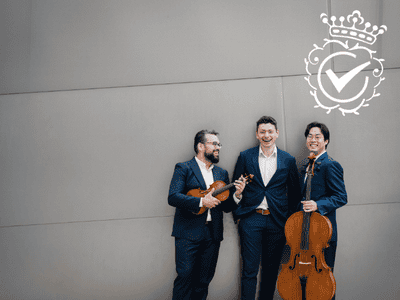
The Complete Bach: Darshan Trio: The Art of Fugue
March 19, 2027 7:30 pm
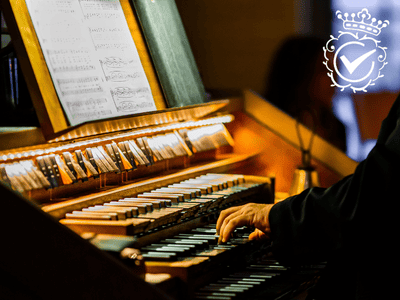
The Complete Bach: Bach Organ: Spring 2027
March 20, 2027 4:00 pm
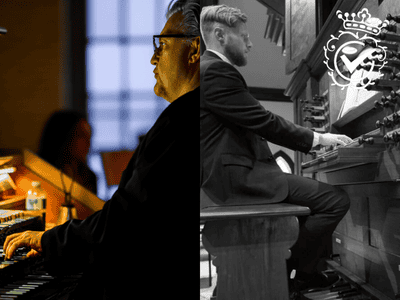
The Complete Bach: Bach Organ: Clavier Übung III
April 25, 2027 4:00 pm



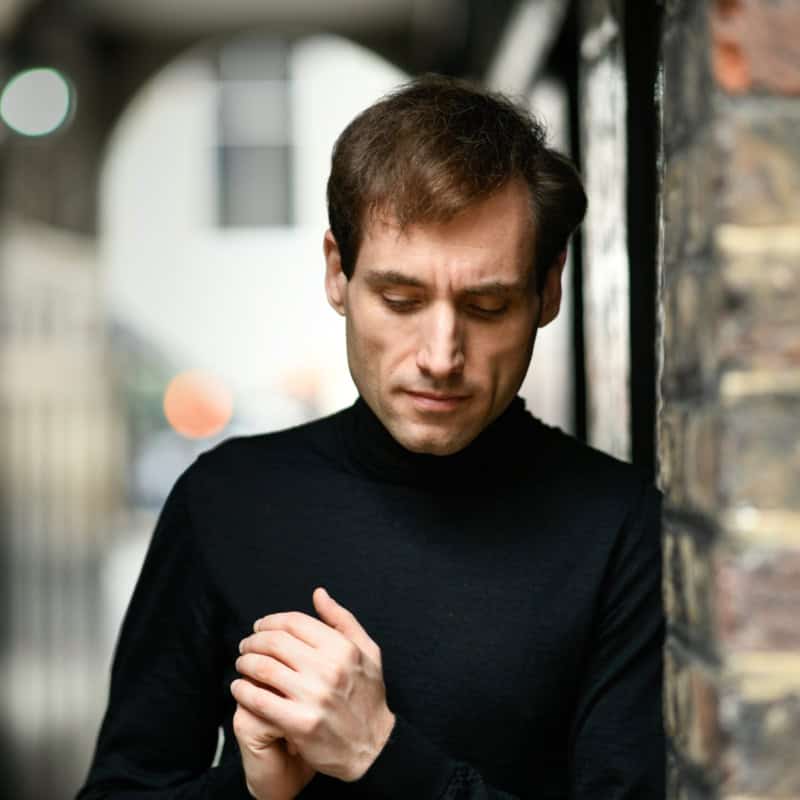
Boris Giltburg
Boris Giltburg is lauded across the globe as a deeply sensitive, insightful and compelling interpreter for his narrative-driven approach to performance. Critics have praised his “interplay of spiritual calm and emphatic engagement” as “gripping… one could not wish for a more illuminating, lyrical or more richly phrased interpretation” (Suddeutsche Zeitung). During the 2025/26 season, Giltburg appears with the Leipzig Gewandhaus Orchestra, Frankfurt Radio Symphony, Philharmonia Orchestra, Helsinki Philharmonic, Salzburg Mozarteum, Warsaw Philharmonic, Essen Philharmonic, Basque National and Taipei Symphony orchestras. Throughout the season, Giltburg is Artist-in-Residence at the Dresdner Philharmonie and returns to the orchestra on three occasions, and embarks on a tour to Italy. This season sees Giltburg collaborating with leading conductors including, Jukka-Pekka Saraste, Krzysztof Urbański, Dima Slobodeniouk, Dalia Stasevska, Kahchun Wong, Jun Märkl and Anja Bihlmaier. Giltburg’s long list of orchestral collaborators extends to the Czech Philharmonic, Orchestra dell’Accademia Nazionale di Santa Cecilia, Finnish Radio Symphony, Orchestre National de France, Oslo Philharmonic, Philharmonia Orchestra, NHK Symphony and Seoul Philharmonic, among others.
Giltburg regularly gives recitals in the world’s most prestigious halls, including Concertgebouw, Amsterdam; BOZAR, Brussels; Elbphilharmonie, Hamburg; Southbank Centre and Wigmore Hall, London; Carnegie Hall, New York; Rudolfinum, Prague; and Konzerthaus, Vienna. Following the success of his Beethoven Piano Sonatas cycle across eight sold-out concerts at the Wigmore Hall, he continues the project at Flagey, Brussels, Palau de la Música, Valencia and Teatro Municipal in Santiago de Chile. In recent years Giltburg has also engaged in a series of in-depth explorations of other major composers such as Ravel and Chopin. Giltburg is widely recognized as a leading interpreter of Rachmaninov: “His originality stems from a convergence of heart and mind, served by immaculate technique and motivated by a deep and abiding love for one of the 20th century’s greatest composerpianists.” (Gramophone). This season sees Giltburg perform the complete Rachmaninov Preludes during the opening weekend of the Southbank Centre’s 25/26 season and Rachmaninov’s 3rd Piano Concerto with the Philharmonia Orchestra at Bold Tendencies. In 2025 Giltburg released an album of Rachmaninov’s landmark Piano Sonatas nos. 1 and 2 alongside his own version of The Isle of the Dead, based on Krikor’s arrangement, which received the Preis der deutschen Schallplattenkritik / German Record Critics’ Award.
A consummate recording artist, Giltburg has recorded exclusively for Naxos since 2015. He was awarded the Opus Klassik Award for Best Soloist Recording of Rachmaninov’s concerti and Etudes Tableaux and a Diapason d’Or for Shostakovich concerti and his own arrangement of Shostakovich’s Eighth String Quartet. Among others, he has won a Gramophone Award for the Dvořák Piano Quintet on Supraphon with his regular collaborators, the Pavel Haas Quartet, as well as a Diapason d’Or and Choc de Classica for their joint release of the Brahms Piano Quintet.
Giltburg feels a strong urge to engage audiences beyond the concert hall. His blog “Classical Music for All” is aimed at a non-specialist audience, which he complements with articles in publications such as Gramophone, BBC Music Magazine, The Guardian and The Times.
Although many of us are familiar with the title The Well-Tempered Clavier, Book I, it does bear some unpacking to understand all the elements that are reflected in its name.
The word tempered refers to a tuning system. The tuning system that we use now is called equal temperament, which means that the distance between every half step is exactly equal. But in tuning an instrument using the perfect intervals that exist in nature, you will come to the end of the entire scale and find that there are chords that sound in tune and chords that sound out of tune. This system, which is often referred to as mean-tone tuning, caused real problems for composers who wanted to compose in every key. Those tuning systems, or temperaments, went through considerable revisions during Bach’s lifetime. Ultimately, a system was devised that allowed a composer like Bach to compose in every key, white note and black note, with all of the keys sounding relatively in tune, even though it fell short of the equal temperament that we use today. So in the title, “well-tempered” means that he is using such an evened-out tuning system.
The word Clavier in German simply refers to a keyboard, although even this presents some questions. What keyboard instrument is Bach indicating? Certainly the harpsichord, but also very possibly the clavichord, a smaller and more intimate household instrument that Bach seems to have liked. With a clavichord, a small piece of metal not only hits the string but maintains contact with it, allowing the player to continue to manipulate the sound, even using a little bit of vibrato with their finger.
But we also shouldn’t rule out the organ. I have heard performances of this collection of pieces by a keyboard player who shifted between clavichord, piano, harpsichord, and organ—all very effectively. We can rule out the piano in Bach’s case; yes, he did encounter the new instrument at the court of Frederick the Great near the end of his life, but there is no evidence whatsoever that he had the new fortepiano in mind when he composed. But as you will hear tonight—and as you may certainly have heard in outstanding recordings over the years—the piano is perfectly suited to the wide range of emotions and musical styles in the WTC.
And “Book I”? Well, Bach wrote two of these Well-Tempered Clavier collections. The one that you will hear this evening dates from early in his years in Leipzig, in the early 1720s. However, some of the movements are found in the Notebook for Wilhelm Friedemann Bach (his eldest son) from the prior decade. This indicates that at least to some extent Bach thought of these works as pedagogical, just as the Inventions had been. But not just pedagogical for players: Bach was always very careful to compose collections like this in such a way that his sons and students could learn all of the various compositional techniques and devices at their disposal.
And all of that is just a definition of the title! As for the works themselves, this universe of musical expression requires a concert, not a set of program notes. How lucky we are to hear this entire book of preludes and fugues—there, we have two more words to define—in one sitting. This feat is an impressive one for any pianist, and it also requires a great deal of concentration from the audience. But that concentration is well rewarded.
As its name suggests, a prelude is a piece that precedes another one. There isn’t much of a definition beyond that; a prelude can take so many different forms, from a majestic French overture to one of the several French dance forms. I like to think of the preludes in WTC Book I as almost improvisational. Listen carefully to the first few measures in each prelude: Bach will often build an entire piece around the melodic, harmonic, and rhythmic motives that he establishes from the outset. Like so much of Bach’s music, the preludes are fundamentally generative—he creates and unfolds an organic movement from the seed of the opening idea.
For audiences of THE COMPLETE BACH, a fugue needs a little introduction. It is a fancy kind of round or canon, with the opening subject returning throughout the fugue as a melodic point of reference. A fugue is fundamentally contrapuntal, meaning that Bach weaves independent lines around one another to create a sonic tapestry. The second most important material is the countersubject, composed quite literally to complement the subject. Personally, I love the challenge of following the subject as it moves from register to register in the piano, called voices even on a keyboard instrument. There will be sections, known as episodes, where the fugue subject is not present, only to re-enter at various junctures, sneaking in like a lamb or roaring in like a lion.
There is a major-key prelude and fugue pair and a minor-key pair for each note on the keyboard from C to B. Not every note name is represented; for example, there is no pair in either D-sharp major or D-sharp minor, since Bach chooses the enharmonic equivalent of E-flat instead. But if you follow in your mind’s eye a keyboard with its alternating white keys and black keys, you can keep track of the 24 pairs as we go along.
– Chris Shepard
Curtis Performance Hall
Assumption University
Tsotsis Family Academic Center
500 Salisbury St. Worcester, MA 01609
Curtis Performance Hall in the Tsotsis Family Academic Center at Assumption University.
SEATING
This venue has stadium-style seating, with accessible seats marked on the seating chart. Row F is the only row that does not require access via stair. Please consider leaving seats in this row available for those who have mobility-related needs. Read more about accessibility here.
PARKING
Parking is in Lot N (Chapel Lot). Accessible parking is available at the rear of the building on the second floor (Building 19) and in Lot N. Read more here.