
October 25 10:15 am
Part of BACHtoberfest Weekend
Start day three of BACHtoberfest Weekend with a glowing choral performance of a Bach cantata by the First Unitarian Church Choir during their Music Sunday service. The concert spotlights the gorgeous acoustics of the sanctuary.
This is a free performance though reservations are requested.
Program
Was mein Gott will, das g’scheh allzeit, BWV 111
Please note: program, venue, time, and artist are subject to change.
BACHtoberfest Weekend 2026 Program
You might also like…
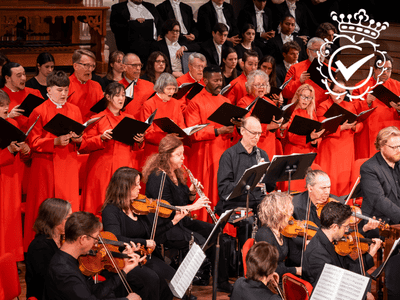
The Complete Bach: Cantatathon 2027
March 21, 2027 4:00 pm



Conductor
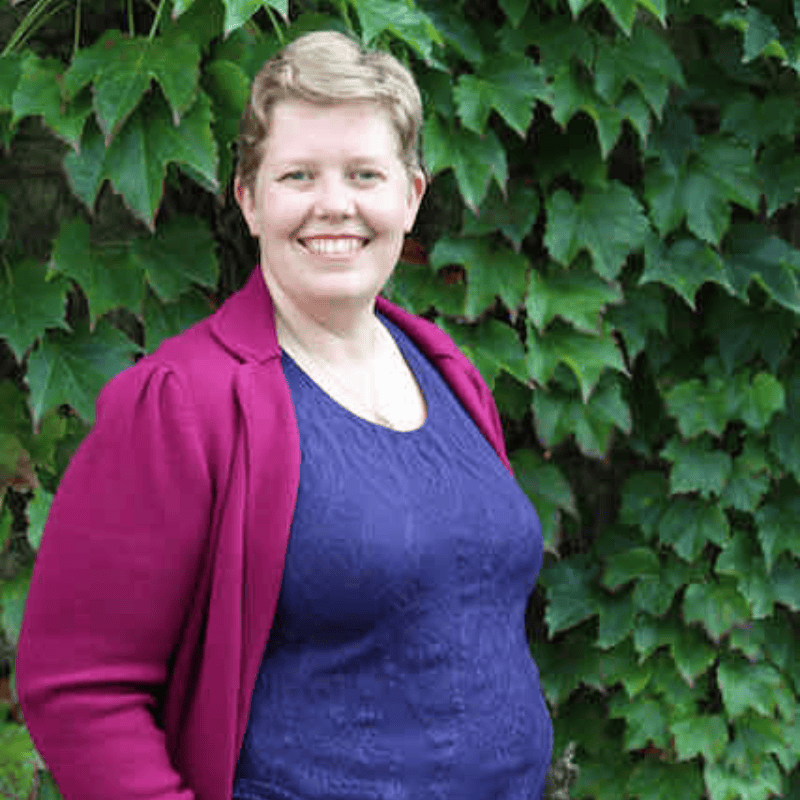
Allegra Martin
Dr. Allegra Martin lives in Worcester, Massachusetts and serves as the Director of Music at First Unitarian Worcester; the Music Director for Convivium Musicum, a Renaissance choir in Boston; and as an Assistant Professor at the Berklee College of Music, where she teaches conducting. She previously taught at Lasell College and was the Director of Choral Activities at the College of the Holy Cross for five years. Allegra holds degrees from Williams College, Westminster Choir College, and a doctorate from the University of Illinois at Urbana-Champaign, where she wrote her dissertation on the cantatas of Margaret Bonds and Langston Hughes. Allegra is also an active Boston-area singer, performing regularly with the Schola Cantorum of Boston.
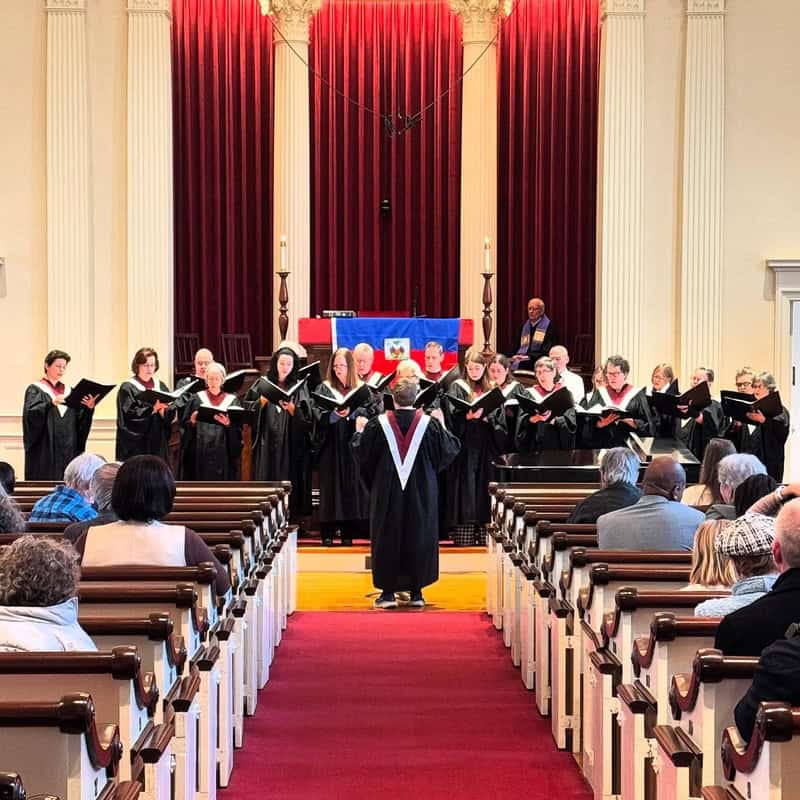
First Unitarian Church Choir
The First Unitarian Adult Choir, located at the historic First Unitarian Church in downtown Worcester, sings three Sundays a month, providing three anthems and all service music. Our 25-voice adult choir embraces a diversity of musical styles and cultures. Our repertoire includes everything from Bach and Bonds to gospel, folk, world music, and more. Our choir, which welcomes all singers, rehearses every Thursday evening. We offer two Music Sundays per year, featuring major choral works. In the past two years, we have shared Bach’s Cantata 61, Mendelssohn’s Psalm 42, Margaret Bonds’ Credo, Handel’s Chandos Anthem No. 4, and Adolphus Hailstork’s Shout for Joy! The choir is also at the center of our annual luminous Christmas Eve service and our large and inclusive performance of Handel’s “Hallelujah Chorus” on Easter morning, which welcomes any orchestral instrumentalist or singer who wants to join in. Two years ago we began an annual tradition of hosting Summer Sings on Thursday evenings in June, when any singer from the community can join us and sing through a major choral work. Past sings have featured the Fauré Requiem, the Mozart Requiem, Bach’s Cantata 61 and Magnificat, an evening of works by Margaret Bonds, and an evening of works by Alice Parker. The adult choir is one of three choirs at the church – we also have a Children’s Choir, open to grades 3-8, and a Youth Choir, open to grades 8-12. First Unitarian is a vibrant and welcoming Unitarian Universalist congregation committed to living out our mission to honor the sacred, connect with one another, and serve justice within our community and our world. Music truly is at the heart of our worship life as a congregation. All are welcome to join the choir; there are no auditions. The choir rehearses on Thursdays from 7-9pm and on Sundays from 8:45-9:45am. Contact Director of Music Dr. Allegra Martin for more information or to join the choir.
Notes on BWV 1066
By Martin Pearlman
Compared to the enormous body of Bach’s vocal music, there are relatively few purely orchestral works from his pen. Aside from solo concertos, we have the six Brandenburg Concertos and the four Orchestral Suites, the former representing the pinnacle of writing in the Italian concerto style and the latter the equivalent culmination for the French style. Unlike the Brandenburgs, however, the Orchestral Suites were never assembled by Bach into a single finished volume. We have no autograph scores for these works and therefore know the music principally through instrumental parts copied out by various copyists, including, among others, Bach’s son Carl Philipp Emanuel, his student Johann Ludwig Krebs, and very occasionally Johann Sebastian himself.
The first suite in C Major is scored for two oboes, bassoon, strings and harpsichord, the woodwinds sometimes being treated as an independent trio. In the opening and closing sections of the Overture, the winds simply double the strings to create a thicker orchestral sound, but in the faster middle section, they emerge several times as a virtuosic trio of soloists. All the movements which follow the opening overture are based on French dances. Among the many interesting features in these pieces, we might mention the graceful, shifting accents in the Courante, as well as the second Gavotte, in which the woodwind trio is accompanied by the strings playing “horn calls”. The lively Forlane is in three layers: a “tune” in dotted rhythms in the top voice, flowing figuration in the middle voices, and a relatively static bass line. The suite closes with two Passepieds both based on the same tune: the melody from the first Passepied is played by unison strings in the second, as the oboes weave figuration above it.
Notes on BWV 111
by Chris Shephard
BWV 111: Was mein Gott will, das g’scheh allzeit
The chorale Was mein Gott will, das g’scheh allzeit, which declares that God’s will is always best for us, had been traditionally sung in Leipzig on the third Sunday after Epiphany for many years before Bach composed his setting of the chorale for 21 January 1725. The text is set to a melody by Claude de Sermisy, published about 1530.
BWV 111 opens with a concerto-style movement in which the chorale is clearly presented in the soprano part, with imitative counterpoint in the other three voice parts. Each new entry, entering as if in a canon, sings a fragment of the main chorale melody before providing chordal accompaniment to the soprano’s chorale tune. Above all of this, the orchestra plays an Italianate concerto reminiscent of Vivaldi. The pair of oboes alternates with the strings in a firm A minor theme that includes such Baroque practices as antiphonal effects and sequences. All of this serves to illustrate the theological message of the chorale’s opening stanza: the believer needs to build firmly on God and trust His plan for their life.
The rather sparse bass aria continues this same theme of trusting God, quoting a line from the chorale’s second verse: “God is your comfort and confidence”, which Bach presents in a slightly modified form of the chorale tune. The opening continuo theme, later echoed by the bass, uses rests to create a sense of expectation. These rests, plus a shifting sense of tonality, the use of repetition and repeated fragmentation of the theme all combine to give the movement a certain austere solidity. The alto recitative which follows the bass aria chastises the congregant who, like Jonah, rejects God’s will. In contrast, the alto declares that the believer who looks to God for guidance will be blessed.
As we so often see in Bach’s cantatas, the austerity of the first pair of solo movements is transformed into joyous acceptance in the second pair. This is certainly true in this cantata, where the alto’s admonishing recitative is followed by a particularly joyful duet for the alto and tenor. The dotted rhythms and repeated pedal notes in the continuo give this movement a strength and joy in stark contrast to the bass aria. In this duet, the text’s reference to walking “with spirited steps” is seen in the ostinato-like rhythmic repetition, scalar melody and strong primary-chord harmonies. Above all of this, the first violin plays a highly ornamented, arpeggiated solo to represent the joy of the steps even as God leads the believer to the grave.
The soprano recitative truly takes us to the grave: in a dramatic text setting, the “death-pillow” becomes a battleground for the believer’s soul. The victory goes to God, represented by the beautiful oboe duet as the soprano sings, “O blessed, desirable end!” The cantata closes with the choir asking God’s help in times of temptation. This movement is a straightforward four-part chordal setting of the opening chorale tune.
First Unitarian Church
90 Main St., Worcester, MA 01608
First Unitarian Church was founded in 1719 and has seen many historical moments, including Paul Revere casting the bell first for the Second Parish’s new building.
SEATING
There is accessible seating in the front of both sides of the sanctuary. The building is accessible via elevator.
PARKING
Parking for the church is on State Street in either lot, in any numbered spot. On-street parking is also available on Main Street, State Street and Harvard Street. Accessible parking is on Court Street, against the north side of the church and behind the building.