
October 25 4:00 pm
Part of BACHtoberfest Weekend
Individual singers from across the region and country, plus members of the Hartford Chorale gather in Worcester for the third-annual choir performance to conclude the 2026 BACHtoberfest Weekend. The BACHtoberfest Choir assembles for this concert annually, rehearsing a series of J.S. Bach’s cantatas together over the course of the weekend prior to the culminating concert on Sunday afternoon.
This ensemble aims to unite voices from everywhere in song, with a shared passion for the music of J.S. Bach.
Learn more about the BACHtoberfest Choir.
Program
Gott der Herr ist Sonn und Schild, BWV 79
Nun danket alle Gott, BWV 192
Gleichwie der Regen und Schnee vom Himmel fällt, BWV 18*
*Performed by the Hartford Chorale. All other cantatas performed by the BACHtoberfest Choir and the Hartford Chorale
Please note: program, venue, time, and artist are subject to change.
BACHtoberfest Weekend 2026 Program
You might also like…

The Complete Bach: Cantatathon 2027
March 21, 2027 4:00 pm



Soloists
Sarah Armstrong
Soprano
Megan Roth
Alto
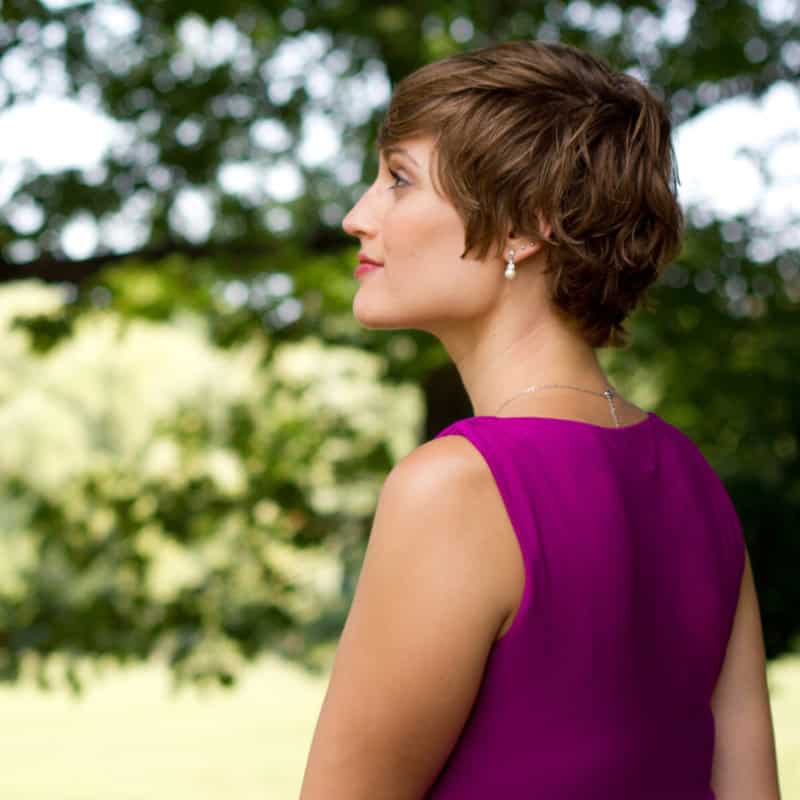
Praised for her “versatile voice” and “rich character portrayals,” mezzo-soprano Megan Roth brings vibrant artistry and emotional depth to every performance. She engages audiences across opera, oratorio, art song, and chamber music, with a repertoire spanning early music to contemporary works. Recent operatic highlights include three role debuts with activist opera company White Snake Projects, a dramatic portrayal of La mort de Cléopâtre with the New England Repertory Orchestra, and acclaimed performances as Tisbe in La Cenerentola and Despina in Così fan tutte with Boston Midsummer Opera. Other roles include Rosina (Il barbiere di Siviglia), Meg (Little Women), and Dorabella (Così fan tutte), as well as appearances in Maria Padilla, Béatrice et Bénédict, Trouble in Tahiti, and Giulio Cesare.
On the concert stage, Megan has appeared as soloist in Copland’s In the Beginning, Handel’s Messiah, and Handel’s Dixit Dominus. Her repertoire includes major works by Bach, Mozart, de Falla, and Duruflé. Megan is the founder and artistic director of Calliope’s Call, a New England-based ensemble known for its innovative, culturally resonant art song programming. She also thrives in chamber music settings, performing regularly with top national ensembles including the GRAMMY®- nominated Skylark Vocal Ensemble, Yale Choral Artists, Spire Chamber Artists, Upper Valley Baroque, and True Concord. She was featured as a violin soloist on Skylark’s GRAMMY®- nominated album It’s a Long Way. She holds degrees from Florida State University (M.M., Artist Certificate in Opera) and DePaul University (B.M. in Violin Performance with honor), and has been recognized by The American Prize in multiple categories.
Outside of music, Megan enjoys yoga, contemporary fiction, and kayaking with her husband and their Boston Terriers, Bronx and Brooklyn.
Dylan Armstrong
Baritone
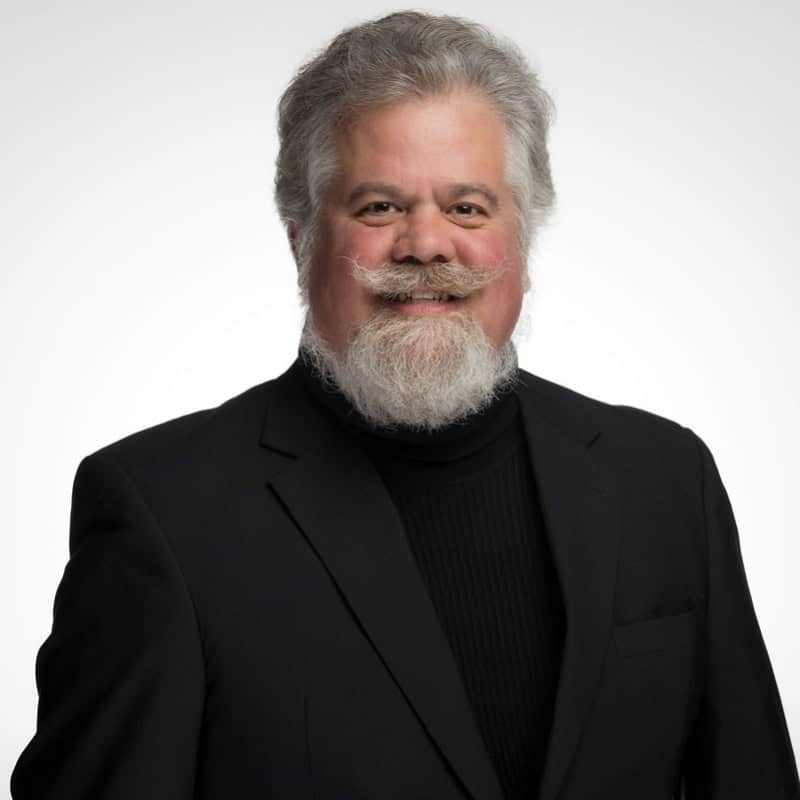
Dylan Armstrong received his Bachelor’s degree from the Hartt School, majoring in opera and oboe. He studied with such teachers as Richard Cross, Humbert Lucarelli, Albert Goltzer, and Miriam Charney. He has performed all over New England in opera, oratorio and music theater with Connecticut Opera and other companies. Dylan is the founding Artistic Director of Hartford HealthCare’s Voices of Care. Dylan is also a member of the professional choral group CONCORA and solos with them regularly. He had his Worcester debut last season at Mechanics Hall as the bass soloist in the Bach Magnificat. He also made his Hartford Chorale debut as the baritone soloist for the Durufle Requiem. In April, Dylan and his wife, Sarah, presented a concert of the songs of Carolyn Halsted at Wesleyan University with the composer at the piano. Next month, Dylan will be the bass soloist in the Bachtoberfest with Music Worcester as part of the 11-year Complete Bach project. Dylan has also been a professional church musician for over 30 years including over 20 years at Asylum Hill Congregational Church where he has been King Kaspar in the Boar’s Head Festival, which he and his wife are now the Co-Chairs of the Festival. In 2008, Dylan conceived, wrote and performed as Charles Ives in a concert celebrating his music in conjunction with the 100th anniversary of Ives’ marriage to Harmony Twichell. Dylan and Sarah live in Hartford with their two cats and have two grown children, Maxwell and Marjan.

Hartford Chorale
Founded in 1972, Hartford Chorale is a volunteer not-for-profit organization that presents, on a symphonic scale, masterpieces of great choral art throughout southern New England and beyond, serving as the primary symphonic chorus for the Greater Hartford community.
Through its concerts and collaborations with the Hartford Symphony Orchestra and other organizations, the Hartford Chorale engages the widest possible audiences with exceptional performances of a broad range of choral literature, providing talented singers with the opportunity to study and perform at a professional level.
Our voices are raised in song to inspire thousands of ears, minds, and hearts.
Hartford Chorale’s dedicated members are avocational singers with professional-quality voices and include musicians, teachers, students, doctors, lawyers, engineers and many more from all walks of life. Members are supported by a small core of professional vocalists members, live throughout Connecticut and Massachusetts and work in many businesses and schools in the region.
Hartford Chorale is governed by a volunteer board, a diverse and impressive group of individuals with a wide range of business and musical experiences. They have a singular vision to keep the Chorale moving forward using our Four-Point Chorale Strategic Planning Framework. Many of the board members also sing in the Chorale.
Conductor
Chris Shepard
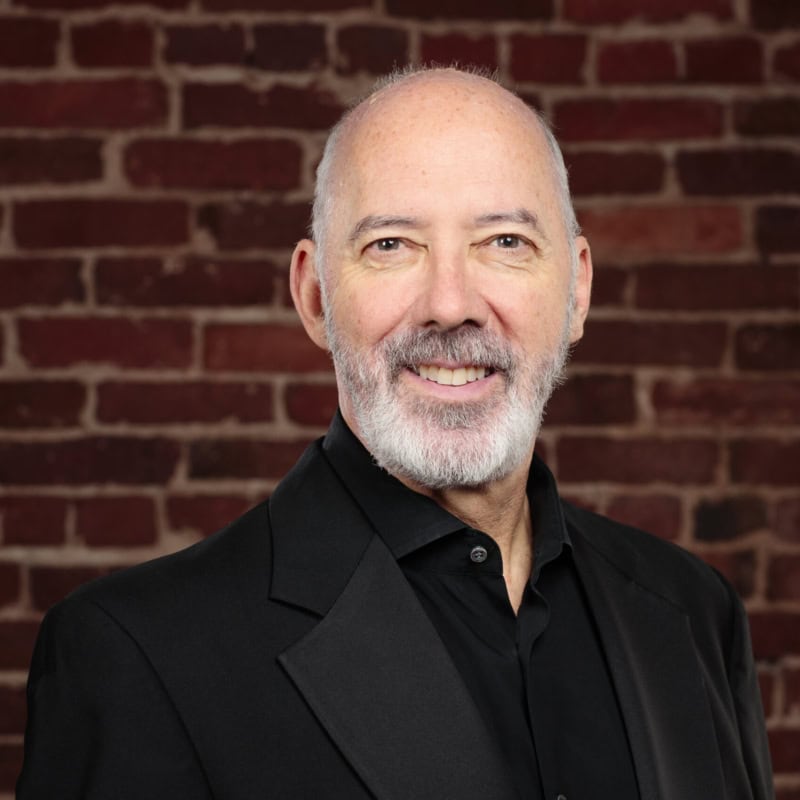
Now in his sixteenth year as Artistic Director of the Worcester Chorus, Chris also serves as conductor of the Connecticut Choral Artists (CONCORA), Connecticut’s oldest professional choir. In May 2024, Chris launched THE COMPLETE BACH, a 132-concert project to present live performances of all of J.S. Bach’s works for the first time ever in America. This monumental undertaking, under the auspices of Music Worcester, was inspired by Chris’s BACH2010 project, in which his Sydneian Bach Choir and Orchestra performed all of Bach’s choral cantatas in Sydney, Australia. THE COMPLETE BACH brings together local ensembles as well as internationally recognized performers such as pianists Jeremy Denk and Simone Dinnerstein, and Boston’s Handel & Haydn Society and Emmanuel Music.
His musical interests hardly stop in the eighteenth century, however. Chris has conducted much of the most prominent largescale choral-orchestral repertoire, including major works by Haydn, Mozart, Beethoven, Rossini, Mendelssohn, Brahms, Fauré, Vaughan Williams, Poulenc, and Britten; a career highlight was the 2022 performance by the Worcester and Masterwork Choruses of Verdi’s Requiem at Carnegie Hall. He has also performed many works by contemporary composers and has premiered works by such composers as Ricky Ian Gordon, Gwyneth Walker, Martin Sedek, Robert Convery, Anna K Jacobs, and Amy Bernon. His choirs have collaborated with a number of orchestras, such as the Juilliard Orchestra, the Orquestra Sinfónica Nacional de Mexico, and the Hartford Symphony Orchestra, in venues that include Carnegie Hall, Lincoln Center and Radio City Music Hall in New York, as well as the Royal Festival Hall in London and the Palacio de Bellas Artes in Mexico City. Chris has prepared choirs for major international conductors, including Yannick Nézet-Séguin, Simone Young, Carlos Miguel Prieto, and William Boughton, as well as for Broadway legend Patti Lupone and Ray Davies of the Kinks. For a decade, Chris was conductor of the Masterwork Chorus in New Jersey, with whom he performed Handel’s Messiah annually at Carnegie Hall; he also led the Dessoff Choir in New York City from 2010 to 2016. Chris made his conducting debut with the New Haven Symphony in 2015.
A committed music educator, Chris has served on the faculty of the Taft School, Sydney Grammar School, Hotchkiss Summer Portals, and Holy Cross College. He founded the Litchfield County Children’s Choir in 1990, and has conducted numerous middle and high school regional and All-State choirs in New England, New York and Australia. He presented two documentaries with SBS-TV, an Australian national public television network, and has given several presentations at conferences for American Choral Directors Association and Australian National Kodàly Association. Chris has been a guest conductor at Emmanuel Church in Boston, a church renowned for its five-decade Bach cantata project, and he currently serves as Music Director of St John’s Episcopal Church in Stamford, Connecticut.
A pianist and keyboard continuist, Chris holds degrees from the Hartt School, the Yale School of Music (where he studied choral conducting with Marguerite Brooks) and the University of Sydney. He researched the performance history of Bach’s B Minor Mass in New York City for his PhD in Musicology; his dissertation won the American Choral Directors Association’s 2012 Julius Herford Prize for outstanding doctoral thesis in choral music.

Jack Pott
BWV 18: Gleichwie der Regen und Schnee vom Himmel fällt
BWV18 was written for Sexuagesima, the third Sunday before Lent. This cantata dates from Bach’s years in Weimar, either 1713 or 1714. The text was penned by Erdmann Neumeister, whose cantata libretti revolutionised German church music in the 17th century. This is one of only five Neumeister libretti that Bach set; this text was also set by Telemann in 1719.
The gospel for the day is the parable of the sower, which Bach set so pictorially in BWV181. In BWV18, however, Neumeister uses a text from Isaiah as his starting point. In this Old Testament quotation, sung by the bass in the opening recitative, God promises that the seed of his word will bear fruit and accomplish His will, “just as the rain and snow fall from heaven.” The opening sinfonia, characteristic of Bach’s early cantatas, seems to use the idea of rain and snow falling for its musical imagery. In an opening motive worthy of Italian concerto grosso writing, the unison strings play a descending fifth figure that rises in a sequence. The starkness of the jagged opening motive, coupled with the extraordinary instrumentation of four violas and continuo, conjure up a stormy scene. The sinfonia essentially alternates string duets with the return of the opening motive throughout, with much use of sequences and imitation.
Typical of Bach’s early vocal writing, the bass recitative features both secco recitative (declamatory, non-metrical, accompanied by short chords in the continuo) and arioso, more metrical, linear setting of text. We find similar juxtaposition of styles in the central choral movement, where the tenor and bass, singing accompanied recitative/arioso sections, alternate in a prayer that our hearts would be like fertile soil. This is a complex movement, with the soprano and then all voices answering the soloists’ prayers with quotations from the German litany. Bach uses a great deal of text-painting in this movement, on words like “rob”, “persecution” and “go astray”.
Like many of Bach’s arias in the early cantatas, the soprano aria is short and in binary form, rather than da capo form. The unison viola accompaniment, reminiscent of the unison violin/viola accompaniment to the famous chorale-prelude in BWV140, provides a muted, lyrical accompaniment to the rather high soprano solo, in which the soloist eschews the treasures of the world for God’s word. The text “away with them”, set to a quick, rising scale in the highest range of the voice, is particularly redolent of the text. The cantata closes with a straightforward setting of the chorale Durch Adams fall.
BWV 79: Gott der Herr ist Sonn und Schild
On 31 October 1517, Luther nailed his ninety-five theses to the church door at Wittenberg, criticising the Church and the Pope for initiating policies that ran counter to scripture and setting up an administration that assumed prerogatives that rightly belonged only to God. Although Luther himself never meant to found a schismatic denomination, this gesture nonetheless was the opening salvo in a series of events that led to the founding of the Lutheran Church. The Reformation Festival was an important event in the Lutheran calendar in Bach’s time, celebrated each year on October 31st.
Bach wrote BWV 79 in 1725, making it part of the third Jahrgang—his annual cycles of cantatas. The text, quite possibly by Erdmann Neumeister, celebrates God’s goodness towards his people, rather than mentioning the Reformation directly. The cantata as a whole is not particularly outsized in dimension, but the substantial first movement is a stunning example of Bach’s mastery of vocal polyphony. Bach must have thought well of the movement himself; he reworked it to become the Gloria of the Lutheran Mass in G, as well as parodying two of this cantata’s arias in that Mass setting.
The scope of the opening chorus is grand. Bach opens with a forty-five bar instrumental introduction—nearly one-third of the movement. The horn fanfare and insistent timpani quavers (which Malcolm Boyd suggests might represent the hammering of the theses to the Wittenberg door) establish the festive nature of the work. The horns’ rhythm, as well as the two-beats per bar continuo part, reflect Bach’s choice of cut common time as a metre. But after the spacious opening fanfare, Bach breaks into a fugue whose subject echoes the hammering of the timpani figure. The resulting rhythmic diminution effect is as exciting as the fugue subject itself. After a recapitulation of the initial fanfare, the choir enters in augmentation, adding one more layer of glory to an already impressive composition. The effect is reminiscent of the Gloria patri from Bach’s Magnificat; rather than slowing down the rhythmic pulse, the music seems momentarily to take flight. The choir recapitulates the fugue, doubled by the orchestra, before we return to the opening fanfare performed by all.
In stark relief to the grand scale of the opening chorus, the solo vocal movements are intimate. The alto aria, a joyful 6/8 duet with the oboe, reiterates the theme of God’s goodness, even repeating the opening motto from Psalm 84: “God the Lord is sun and shield.” As if underlining the importance of those words, Bach repeats the musical motto several times; the shortened B section adds focussed attention on the theme.
Some musicologists believe that an early version of this cantata may have finished with the chorale-prelude setting of Nun danket alle Gott; certainly, as we find in the cantata by that name, BWV 192, three movements are sufficient when the chorale setting is so festive. In a rare example of thematic unity within a cantata, Bach reprises the horn fanfare from the first movement as a counterpoise to the chorale’s straightforward vocal harmonisation.
In his recitative, the bass prays for those who do not belong to the church—those who are “unequally yoked”. The soprano joins him in praying for God’s continued protection. This is a particularly charming duet, quite accessible in its regular phrases and uncomplicated harmonies. Even the counterpoint is fairly simple: the soprano and bass sing homophonically nearly all the time, with the violin obbligato and slightly syncopated continuo part dancing around their phrases. The violin motto returns frequently throughout the movement; like the alto motto in the first aria, this gives a distinctive unity to the duet. The cantata closes with a verse of the hymn Nun lasst uns Gott, dem Herrn. Although it is not as extended as the earlier chorale setting, the horn parts add an effective obbligato to the Renaissance dance-like cadences of the 1575 hymn.
BWV 1: Wie schön leuchtet der Morgenstern
When the editors of the Bach-Gesellschaft, the first edition of the complete works of Bach, began their project in the mid-19th century, they had hoped to begin with the B Minor Mass. That score being unavailable, they opted instead to commence the project by choosing ten of Bach’s greatest cantatas. It was because of this, not for any reason of chronology, that Wie schön leuchtet der Morgenstern was given the honour of being listed as BWV1. In fact, it was written towards the end of the second Leipzig cantata cycle in 1725, composed for the Feast of the Annunciation, which fell on Palm Sunday in that year.
In the reading for the day, Luke 1:26-38, the angel Gabriel appears to Mary and tells her that she will bear God’s son. This text has an obvious connection with Christmas, and indeed, Bach’s cantata uses Phillip Nicolai’s justly famous Advent hymn as the departure point for this cantata. Bach chooses to highlight the theme of kingship in the instrumentation of this cantata, using horns, which are associated both with the “call” of the annunciation, and with kingship. The use of the oboes da caccia find a later expression in the Christmas Oratorio, where they represent the bucolic colour of the shepherds. Even the metrical design of the opening movement, redolent of a pastorale, finds a later echo in the Christmas Oratorio.
This intricate and beautiful movement combines four different musical themes: kingship (horns and oboes da caccia); the opening instrumental motto derived from the chorale tune; the morningstar, illustrated by the filigree of the two solo violins; and the chorale tune itself, sung as a slow cantus firmus by the sopranos.
The first recitative links the music directly to the appearance of Gabriel, followed by a joyful and florid soprano aria. As is often the case in Bach’s sacred music, spiritual “fire” is illustrated with melismatic semi-quaver writing. The bass recitative which follows refers directly to the “Morgenstern” of the chorale—the Morningstar, or light from heaven. The tenor’s stately, almost minuet-like answer is a song of praise full of imagery about singing and music.
Nearly every Bach cantata finishes with a 4-part chorale, a hymn that would have been well-known by the congregation, although it is not believed that they joined the choir at the end of the cantata. These settings, though always intricate in their harmonizations, are generally quite straightforward, with the orchestra doubling the choir parts. BWV1 provides a wonderful exception to Bach’s usual practice. In this setting, the second horn plays an obbligato fanfare-like accompaniment, recapitulating both the idea of Gabriel’s annunciation and the kingship of God, as well as echoing the violin figuration from the opening movement, representing the morningstar.
BWV 192: Nun danket alle Gott
It is unclear when Bach wrote BWV 192, though it was possibly for a wedding or Reformation Festival in 1730. Like other late Bach cantatas (the bulk of his cantatas were composed in yearly cycles between 1723 and 1726), this cantata has no recitatives or arias. Instead, all three movements are based on the 1636 chorale Nun danket alle Gott, with two choral movements surrounding a soprano-bass duet.
The orchestration of flute and oboe pairs with strings gives a brilliant color palette that Bach explores to great advantage in the cantata. In the ritornello of the substantial opening chorus, the woodwinds trade arpeggios while a short motive based around a repeating note is passed between the strings and winds. Following a triumphant homophonic choral statement, the lower three parts of the choir sing a surprisingly long contrapuntal passage before the chorale melody is heard in long notes in the sopranos. The material becomes gentler for the second half of the chorale, which speaks of God’s blessing from infancy. The opening material returns at the end of the movement, finishing with the same vocal explosion that marked the choir’s first entry.
The two choruses are pure Italian Baroque, but the central duet is more forward-looking, with elements of the emerging style galant evident throughout. The question and answer phrases, homophonic instrumental writing, regular phrase lengths and simple harmonies place it alongside the style of music that Bach’s sons were writing in the 1730s. Even the counterpoint between the soprano and bass soloists is less complex than Bach’s usual writing. The bass opens with a reference to the chorale tune (though he veers away from it quickly), and after the soprano enters, they move together in loose canonic imitation or parallel intervals. For the second half of the binary movement, the two singers merely swap parts before the orchestra closes with a full statement of the opening ritornello.
Like the opening chorus, the final chorus is also triumphant and vigorous. Set in 12/8, the instrumental ritornello quotes the gigue from Bach’s third orchestral suite. This material returns between phrases of the chorale sung by the choir. In these iterations, the sopranos sing the melody, with a gigue-like harmonization in the lower three parts—writing that is more instrumental than vocal. We may not know the specific occasion for which Bach composed this cantata, but one thing is never in doubt: by the end of this breathless movement, it is certain that it was written for a celebration!
Mechanics Hall
321 Main Street Worcester, MA 01608
Mechanics Hall, built in 1857, is a four-story structure that remains an incredible venue for live music. Renowned for its acoustics, it is located in downtown Worcester just blocks away from Route 290.
SEATING
Seating in the floor level of the Great Hall is accessible via elevator, by the Waldo St. entrance to the building. The balcony is not accessible by elevator. Read more about accessibility here.
We suggest parties with small children sit in our side balconies whenever possible, as they provide the best view for small children who may not have a clear view from the flat seating on the floor level.
Balcony seating has less leg room. If you’re a taller patron, we recommend floor seating or choosing an aisle seat in the balcony section.
PARKING
The closest parking garage is Pearl Elm Garage (20 Pearl St.) Music Worcester offers free parking for Mechanics Hall presentations – read more here. There is also on-street parking on neighboring streets.